
Meet the Featured Speakers of Shift UX 2026
Shift UX 2026 is bringing together practitioners who are actively redefining what UX work looks like — not just theorizing about it. Leading that lineup are two featured speakers whose careers embody exactly the kind of shift this conference is about.

Catt Small, Staff Product Designer at Dropbox and Author of The Staff Designer
Catt Small has done design work for companies of all sizes, including Asana, Etsy, SoundCloud, and Nasdaq. She started coding around the age of 10 and designing at 15 — a background that’s shaped a career spent moving fluidly between craft and leadership. Read more »

Jesse James Garrett, Fractional AI Transformation Leader, Intentional Associates
Jesse has been one of the most prominent voices in digital product design for more than 25 years. He works directly with digital design leaders at the forefront of new design practices, helping organizations navigate exactly the kind of transformation Shift UX is built around. Read more »
Catt and Jesse join a curated group of practitioners — including our four pillar leaders — for two days rethinking what UX practice looks like when the roles blur and the work still has to get done.
Early Bird Pricing for Shift UX 2026 Ends This Friday
Good news, bad news.
The good news: we’re extending early bird pricing for Shift UX 2026 (September 23-25 in NYC and live online).
The bad news: this is the last extension. Early bird pricing closes for good this Friday, July 31.
If you’ve been meaning to register, this is the week to do it. A few reasons why:
- The four practice pillars that make up the conference
- Curators Stef Hutka, Abby Covert, Jemma Ahmed, and Jon Fukuda
- A room full of people wrestling with the same questions about where UX is headed
Once Friday passes, the price goes up. No more extensions after that.
What Will the Future of UX Actually Look Like? An Interview with Shift UX Curator, Stefanie Hutka
Stefanie Hutka is a design researcher, educator at UC Berkeley, and one of the curators behind Shift UX 2026, where she’s leading the human-centered tooling pillar. She’s also the author of an upcoming book with Rosenfeld Media, What Your Machines Should Do: The Science and Strategy of Human-Centered Automation. We sat down with her to ask this conference is needed now — and what’s actually at stake if the field doesn’t get the shift right.
Why does UX need a conference like this right now?
AI is rewriting the product development playbook, and that leaves UX practitioners facing questions the field hasn’t had to answer before. How do you design for systems that aren’t deterministic? What does it mean to move from playing one instrument in the orchestra to conducting it, as more of the artifacts we used to create by hand get delegated to AI? And as the lines between product, engineering, and design keep blurring, what’s left that’s distinctly ours?
Shift UX exists to help practitioners work through exactly that — to author their own chapter in this new playbook, and to steer these powerful systems in ways that extend human capability instead of replacing it.
Is UX actually dead?
No, but a lot of our old titles might be. The foundational skills UX practitioners bring — framing and reframing problems, prototyping, research — are more important now than ever. What’s shifting is the shape of the roles built around those skills. The healthier question isn’t “will the title UX researcher still exist in two years,” it’s “what are the underlying skills, and how do we adapt them for what’s coming.”
What’s your pillar about, and why does it matter right now?
My pillar is human-centered tooling, and it really has two sides. There’s the tooling we use to do UX work (our design and research tools) and the tooling we help build for others. Either way, the tools we use are inseparable from craft. What we choose to delegate to a machine shapes what skills we actually keep practicing.
On the build side, the challenge is designing tools that help people express their intent — and expand their thinking and judgment, rather than erode it. That’s the exact territory my upcoming book digs into. I’ve spent a good chunk of my career as a design researcher building creative tools, so I’ve lived both sides of this pillar myself.
Who should attend, even if their title has nothing to do with UX?
Anyone whose job involves helping build products people love. Product designers and researchers are the obvious fit, but this is just as relevant for product managers, engineers, product marketers, salespeople, and anyone thinking about what makes an experience good and how that translates into value for customers.
There’s also a whole other audience I think about a lot as an educator: I teach UX at UC Berkeley, mostly to professional master’s students headed into industry. Anyone with a stake in the future of design education (academic directors, instructors, professors) should find real value here too.
Do you have a story that captures why the work matters more than the title?
My own career, honestly. I’ve always operated with a kind of UX Swiss army knife skill set, living in the liminal space between academic and applied research. That background let me play in a lot of spaces that weren’t technically in my job description — some days research, some days product strategy or prototyping. In my consulting work today, I’ve effectively moonlighted as a product marketer and a business development specialist, depending on the client. The underlying skill set stays the same; it just adapts to whatever the application calls for.
I see the same pattern in my Berkeley classroom. My Introduction to UX Design course reliably pulls in a mix of product managers, designers, and researchers — different backgrounds, all converging on UX as the unifying thread. The titles vary. The underlying skills don’t.
What worries you if the field doesn’t make this shift well?
A few things. First, I think we’ll keep seeing tools designed to invite cognitive offloading rather than cognitive expansion — the kind of metacognitive support that helps you think about your own thinking, make new connections, generate real knowledge. Right now, a lot of knowledge work happens through a plain prompt box, which is a strangely dated interface for what these systems can do, and it nudges people to treat generative AI as an oracle rather than a collaborator. If the people with the skills to elevate that interaction aren’t empowered to do so, I think we risk an erosion of critical thinking at a societal scale — more “thought-shaped objects” than anything genuinely original.
Second, I worry about efficiency getting prioritized over effectiveness. UX as a discipline has traditionally been the one asking “is this actually a good experience,” not just “is this fast.” If we don’t navigate this shift deliberately, that focus on effectiveness could get swept aside.
Third — and this is a bit further out — I think a lot of us are focused on agentic workflows and generative AI, but physical AI and robotics are coming up fast behind them. A robot that isn’t designed to fit into someone’s actual context, their home, their routines, isn’t automatically a good product just because it’s capable. Do we want a humanoid robot standing in the corner of the living room with its arms crossed when it’s not in use? Or something that actually integrates into the environment — the way Frog’s robot gnome concept reads more like a friendly coat rack than a machine. Getting this right means thinking in systems: not just LLMs, but models of governance, of integration, of how information moves through people’s lives.
That’s really the case for Shift UX. The shift is coming either way. The question is whether the people best equipped to shape it well are the ones doing the shaping.
Stef Hutka is curating the human-centered tooling pillar at Shift UX 2026, taking place September 23–25 in New York City and live online. Learn more and register.
Master every dimension of product management with Julia Barham’s new book, The Product Management Playbook: Create, Ship, and Optimize Winning Products
Product management is one of business’s most rewarding roles. It’s also one of the hardest to master without a clear roadmap. That’s exactly why Julia Barham wrote The Product Management Playbook.
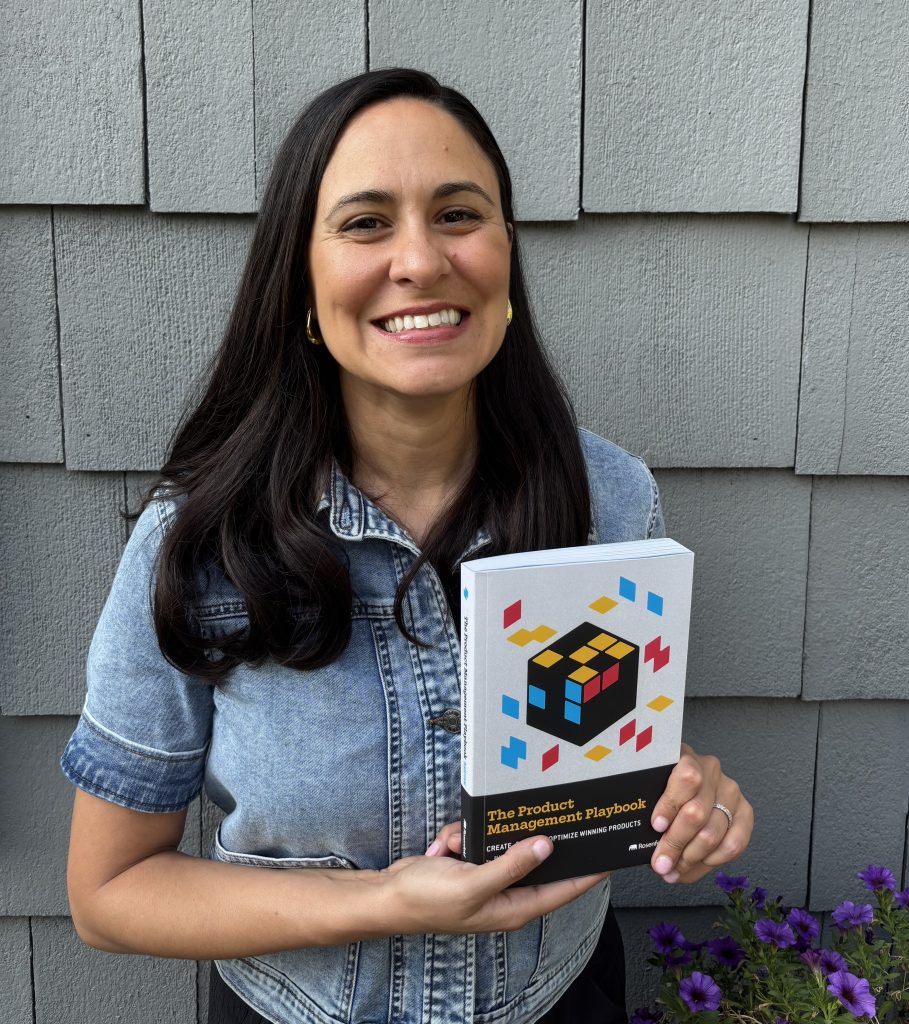
What is The Product Management Playbook?
This book is a practical field guide for anyone who turns messy problems into real products and then lives with the results. Whether you’re breaking into product management, growing into leadership, or coaching your team, this book meets you where you are.
Why write a book about product management?
Product management is changing fast. As AI and automation take over more of the delivery and coordination work PMs traditionally handled, the role is shifting toward deeper discovery, customer insight, and strategic thinking. That creates both anxiety and opportunity.
Julia Barham has spent years mentoring rising product leaders and helping teams bridge the gap between ambitious strategy and daily execution. She wrote this book so you don’t have to figure it out alone.
As Vijay Raghavendra, Chief Technology and Product Officer at GEICO, puts it: “The book every aspiring product manager needs, and every experienced one will wish they’d had sooner.”
What will I take away?
The Product Management Playbook gives you:
- A 40-skill self-assessment to baseline your core competencies and map your growth as a PM
- 21 step-by-step methods covering the full product life cycle, from building an MVP to scaling a market-leading solution
- Ready-to-use templates for discovery and delivery you can bring into your work right away
- Expert advice from top voices in the field on what separates elite PMs from the rest
- A chapter on AI product management, including five technologies and six skills every PM should develop
Who is this book for?
The Product Management Playbook is for:
- Current and aspiring product managers
- Product leaders looking to coach and develop their teams
- Engineers, designers, and data analysts considering a transition into product management
- Business leaders who want to better understand the PM role
Hear Julia in conversation with Lou Rosenfeld
Want to hear more from Julia before diving in? In this episode of the Rosenfeld Review podcast, Julia and Lou discuss why PM roles are shifting toward discovery work, how AI is changing delivery and project management tasks, why curiosity is a PM’s most underrated skill, and how self-education and mentorship can help professionals adapt during an uncertain AI-driven transition.
Who is Julia Barham?
 Julia Barham is a product executive, patented inventor, and veteran of the full product journey, from zero-to-one launches to scaling market-leading solutions across Fortune 100 companies. She has built inaugural product teams, led B2C and B2B products, and run digital experimentation engines that generated multimillion-dollar revenue gains. Her true passion is helping teams cut through corporate complexity and build products that actually matter.
Ready to dive in? Order your copy of The Product Management Playbook today!
Read the first chapter of The Product Management Playbook by Julia Barham
The Product Management Playbook: Create, Ship, and Optimize Winning Products by Julia Barham gives you the tools required to master one of business’s most rewarding roles. You’ll assess your skills, learn core concepts, apply 21 proven methods covering the full product life cycle, and learn from expert insights and real-world examples that will sharpen your product sense. Along the way, you’ll become the PM everyone wants to work with.
Read chapter one for free below!
Chapter 1
Ask a product manager to describe their job, and you’ll hear classic analogies, like orchestrators, translators, and team quarterbacks. Ask their design and engineering partners? You’ll get cheeky responses like cat-herders and chaos-wranglers. Or there’s what your family calls you. . . a project manager. (I promise, it’s not the same thing, Mom!)
But honestly speaking, product management is a practice and titles don’t matter. Outcomes matter. And the product manager’s job is to accomplish one outcome: define and ship useful products that create value for customers and companies.
So, product managers do whatever it takes. They wear multiple hats, learn many skills, and get really nosey—developing expertise across business, the market, design, data, and technology domains to define the North Star vision and product strategy. Along the way, they build bridges by bringing partners and experts together to create alignment and momentum. And they provide strategic leadership and structured planning to guide teams across the product development process—from problem exploration to solution design, delivery, and continuous optimization.
Are you considering a career in product management? It’s a lot harder than it looks. Fair warning: your day-to-day duties and blockers will fluctuate depending on your solution and your company’s maturity. Constraints are a daily reality in this ‘eld, so remove “easy” from your vocabulary entirely. On good days, people will still call you a project manager, and on tough days, you might call yourself crazy. But if you love rallying teams, making sense of ambiguity, and building useful products that create value for customers and companies, product management can be the most energizing role in the world.
NOTE PRODUCT MANAGERS VS. PROJECT MANAGERS
Product managers are responsible for defining why a solution matters, who benefits from it, and what the solution requires before shifting into when and how it’s delivered. Project managers usually focus on when and how work is delivered after the solution is defined. That said, lines can blur at some companies.
The Product Manager’s Role Explained
This book is for product managers (otherwise known as PMs) who define, build, and ship technology-enabled solutions, including digital products, services, and experiences. As the connective tissue behind solutions that define our everyday lives and drive business growth, PMs are dynamic team players that tackle a staggering list of responsibilities. Figure 1.1 shows the duties many PMs shoulder today.
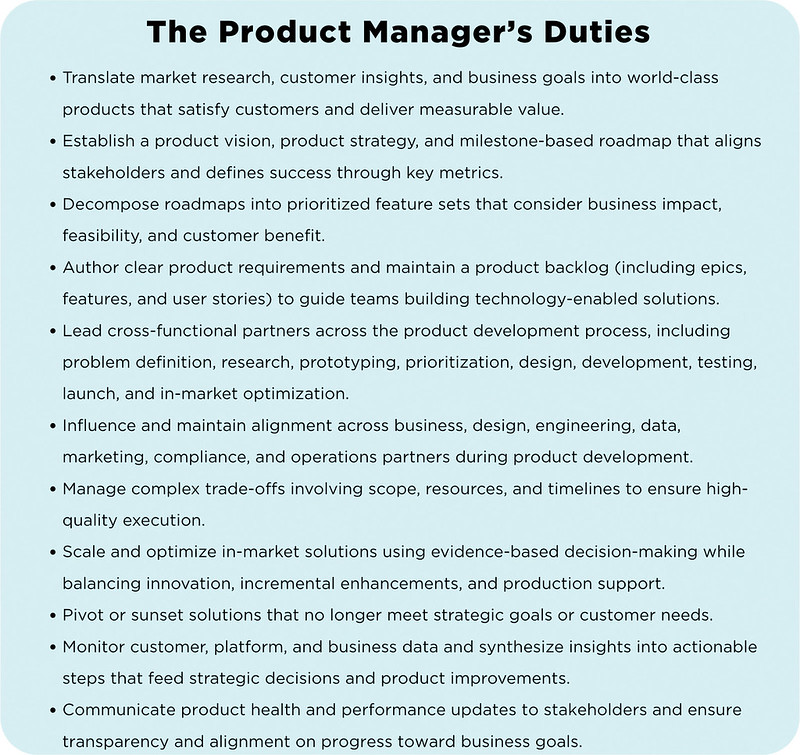
FIGURE 1.1 Duties and methods will vary across companies. Chaos-wrangling is universal.
In an ideal situation, the product manager’s role closely resembles this description, but what’s on paper often doesn’t reflect reality. For example, not all companies clearly articulate their business goals, which makes translating those goals into solutions very difficult. Also, many PMs lack durable access to user research, design, data, and marketing experts. Even worse, some businesses are still learning why product discovery and customer research matter. When reality and expectations don’t align, every product manager harnesses an essential superpower: tackling ambiguity.
CLARITY IS THE JOB: THE FOUR TYPES OF AMBIGUITY PRODUCT MANAGERS TACKLE EVERYDAY
Product management is uniquely an end-to-end process. Few roles span the entire product development process from initial insight to post-launch optimization. End-to-end ownership is rewarding, but it also creates pressure to have all the answers. Because PMs sit at the intersection of many stakeholders and handoffs, your teams will look to you for direction when chaos starts to rise. To lead effectively, you must learn to tackle these four types of everyday ambiguity with a steady hand:
- Problem ambiguity: Business stakeholders speak in “features” while users speak in “symptoms.” In a sea of conflicting feedback, PMs don’t just listen—they synthesize. They use data and sharp judgment to define what really matters, why it matters, and who to optimize for.
- Priority ambiguity: On Monday, you have one clear goal and by Tuesday three “fires” landed on your desk. When everything seems urgent, the PM operates as a filter for team focus, deciding what’s important to tackle first and why.
- Solution ambiguity: A brilliant strategy with poor execution leads nowhere. Great PMs partner closely with design and engineering teams to understand the art of the possible. And they craft holistic requirements to ensure that the team builds a solution that meets customer and business needs.
- Organizational ambiguity: Fuzzy reporting structures, multiple handoffs, and shifting dependencies are a rite of passage for PMs in large organizations. The best PMs don’t wait for blockers to emerge. Instead, they build informal networks, call their contacts, and influence decision-makers to clear organizational blockers before they stall progress.
The Core Domains of Product Management
Shipping world-class products requires multidisciplinary skills and a collaborative mindset. To be successful, product management demands expertise across five core domains: the market, your business, design, technology, and data (see Figure 1.2). By fusing and synthesizing insights across each of these areas, PMs develop a product sense: the ability to craft technology-enabled solutions for products that satisfy customers and build durable businesses. Knowledge across these domains also makes you, the product manager, a stronger collaborator and partner when leading cross-functional teams. Throughout this book, you will find concepts, methods, and resources to level up your domain knowledge across each area.
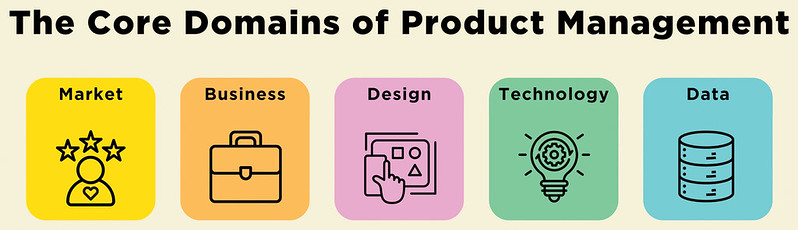
FIGURE 1.2 Expertise in one or two of these domains makes a transition into product management easier.
Domain expertise doesn’t just help you make better decisions—it helps you master a vital skill in everyday product management: influence-based leadership. Yes, new PMs should build knowledge in each domain to develop a strategic point-of-view, but success often hinges on how well you use that knowledge to align disparate roles and voices into a singular mission. Depending on context, domain expertise can help you be the shield for your team (protecting them from distractions or chaos) or the sword that cuts through indecision by communicating in a way that resonates with your stakeholders.
Flavors of Product Management
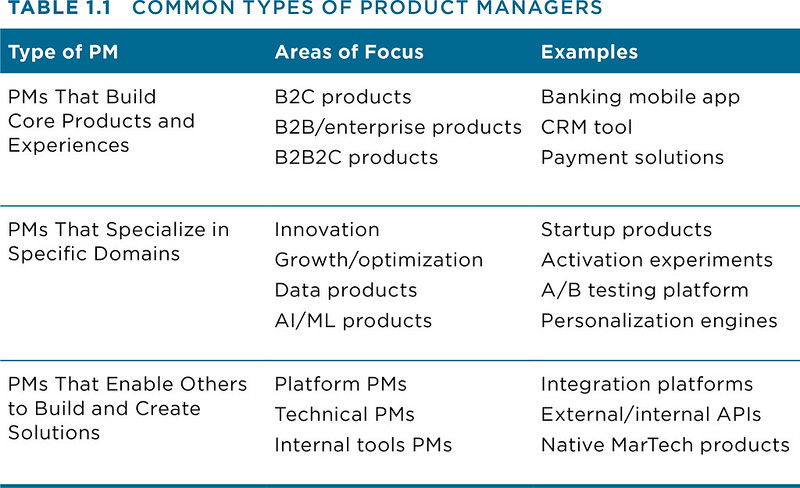
There’s no ideal path into product management. The field is a mosaic of professionals that arrive from diverse backgrounds. Many PMs start in product management with a T-shaped skill set, meaning they arrive with deep expertise in one or two domains and broad competence in the others. Depending on the company’s needs and individual expertise, they either step into generalist or specialist roles. Generalist PMs are like a Swiss-army knife—they have a broad range of knowledge and can work across the entire product life cycle. Specialist PMs often excel in specific technologies or business outcomes. Table 1.1 shows several common flavors of product management roles today. (Keep in mind, these are not mutually exclusive; some PM roles are a hybrid version of these.)
Like the role itself, product team structures vary widely. Depending on the company, you might find yourself aligned to business outcomes, customer segments, user journeys, specific features, or technical architecture boundaries. As an individual PM, you won’t be dictating team topology or org charts; however, understanding how to navigate your organization is a critical skill. Having awareness of the company’s structure and reporting relationships will help you quickly identify and collaborate with partners. Start building your network now!
THE ORIGIN STORY OF PRODUCT MANAGEMENT
If you’re wondering where modern product management comes from, here’s an abridged history lesson that starts in the 20th century.
1920s
To combat product commoditization, Procter & Gamble began market research to understand how and why customers used their household products. In 1931, they invented brand management teams to ensure that consumer insights shaped product, packaging, and distribution strategies.
1950s
The Toyota Production System, developed in the mid-1900s, transformed the manufacturing process through two core principles: jidoka (automation with a human touch) and just-in-time (continuous production flows that minimize waste). This product management strategy scaled high-quality, low-cost production by blending machine automation with human wisdom.
1990s
Toyota’s approach inspired Lean, a business management framework focused on value stream efficiency and the elimination of unnecessary activities. Businesses, nonprofits, and government functions embraced this new way of working to develop, deliver, and manage goods and services.
2000s
Influenced by modern business management and manufacturing methods, seventeen experts published the “Agile Manifesto” in 2001 to overcome rigid software development practices. The manifesto principles inspired several product management methodologies rooted in user-centered development, cross-functional teams, and continuous delivery. The shift in product development practices transformed early product managers from isolated requirements owners to a central team figure focused on aligning why, who, what, how, and when across the team.
2020s
Today, product management is a high-leverage, interdisciplinary function at thousands of digitally-transformed companies. PMs are no longer an extension of technology teams; in many cases, they now report to product teams and chief product officers. In the modern era, PMs operate at the intersection of customers, business, design, and technology to continuously define, build, and ship products that are useful, feasible, and viable.
The Biggest Myths in Product Management
Some of you reading this book are current PMs trying to level up your game. Others are considering the leap into product management. Regardless of your stage, there are two big misconceptions that skew expectations and stall growth for product managers worldwide. Let’s debunk these myths right now so you can move forward with a clearer sense of purpose and empowerment.
Myth 1: The Myth You’re Told
Contrary to what you read and hear, product managers are not mini- CEOs. Yes, there are some parallels, given the ownership mindset and leadership skills required to be a PM, but overall, the PM’s job comes with less razzle-dazzle and a lot less authority than a CEO. It’s true that in some small companies, many product managers often execute founder-driven ideas. However, while the PM may have a broader responsibility for the customer experience, they usually have less influence in the product’s vision and strategic direction than the co- founder. In large companies, many PMs lead small, cross-functional teams with a well-defined scope, but they are removed from broader vision and strategy conversations. Across all companies, it’s rare for product managers to own the P&L (profit and loss) responsibility. For example, CEOs can choose their teams, dictate resources, and control the budget. Product managers, however, can’t do any of that.
Instead of a mini-CEO, here’s a less glamorous, but more accurate metaphor: product managers are the glue of organizations. They are masters at unifying, filling gaps, and combining discrete insights together to establish product sense. They align customer needs to business goals and operate at the intersection of five large domains— business, customer, technology, data, and design—to create valuable solutions. Along the way, they bring together dozens of partners, subspecialties, and dependent teams, ensuring that everyone understands the core vision and works toward the same goals. And they do it without any formal authority.
Myth 2: The Myth You Tell Yourself
Despite what job descriptions say, many early career PMs do not participate explicitly in vision setting and strategy formation. This is especially common when PMs own specific features or capabilities in a large product. In this environment, it’s easy to believe that leaders create the vision and strategy, and you just deliver it. (And yes, many times product leaders are responsible for a cohesive product vision across a large portfolio of products and services.)
But the myth is believing that your scope is not worthy enough for a vision and a strategy, too. Even if your boss doesn’t explicitly say so, no product scope is too small to think strategically. Take authentication, for example. If you own the log-in experience of an app, what’s stopping you from imagining the North Star vision and crafting a strategy to make that a world-class solution? Nothing. The same thinking applies to other examples, too. Whenever you own a specific problem area, you should find inspiration, create a vision and strategy, and proactively share it. You don’t need to wait for someone to ask you—start practicing now, especially if you see a product leader role in your future.
Why Product Managers Matter More Than Ever
Recent advances, mainly driven by AI technologies, are starting to blur lines across product thinkers, product builders, and everyone in between. Today, it’s easier than ever to create a product and launch a solution quickly. But speed often sacrifices quality, and developing a solution instantly doesn’t mean it’s inherently useful and valuable. Remember, product management is a practice that requires strategic thinking across multiple domains, not just execution chops.
Companies will always need individuals who think deeply about market opportunities, customer problems, and user needs. They need people who will envision brand-new value propositions and build solutions in previously unimaginable ways. And of course, they’ll need thinkers and doers who can navigate organizational politics and keep teams moving toward a shared vision. These skills will become more critical as automation eliminates mundane tasks.
Yes, AI is reshaping and accelerating parts of the product development life cycle in powerful ways, but even AI product teams require human-in-the-loop checkpoints. To be sure, the future still needs product people. Truth-seekers and truth-tellers. Strategists and executors. The glue that holds everything together.
Tackling the Confidence Gap PMs Feel Today
Right now, thousands of product managers are fumbling their way through product work every day, and honestly, who can blame them? Job descriptions don’t match reality, teams are spread thin, and many PMs work for companies that are attempting half-baked transformations. As more companies have gone all-in on digital, many people flipped into product management job titles with zero coaching. Zilch! And when PMs change companies, most are thrown into the deep end on day 1 without any training. To make matters more concerning, many PMs are panicking about career longevity, given the rise of AI.
The confidence gap many product managers face today is real. But you can still become an exceptional product manager despite these constraints. You just need a realistic mindset about your responsibilities, a toolkit of best practices, and a ton of grit. That said, becoming an exceptional product manager is a marathon, not a sprint. Set your expectations accordingly. Even with great coaching, it’s impossible to become a solid product manager in less than two years.
To develop real product sense, you need experience with different solutions, teams, and product life cycles. (And product life cycles can move slower than you’d expect.) Sure, you can attend bootcamps or conferences, but hands-on exposure is where real learning happens. It helps you recognize patterns across people, products, and processes that lead to success or failure.
But with any race, success is so much easier when you’ve got support and advice. Across each chapter, you’ll acquire skills and methods to tackle every aspect of the product life cycle with examples, expert advice, templates, and practical strategies. You’ll learn tips to develop a stronger brand with partners, adopt a player-coach management style, and prepare for a journey toward product leadership. By the end, you’ll have an end-to-end view of the product manager’s responsibilities and techniques for tackling whatever assignment comes next. . . and tackling it with confidence.
So, consider this book your product management marathon coach. Your training starts now.
Excerpt from The Product Management Playbook: Create, Ship, and Optimize Winning Products. Rosenfeld Media, 2026.
What does the future of UX look like?
Is the role of UX/UI designer dead?
We’re here to tell you that the answer is a resounding no. Because UX isn’t dying; it’s shifting.
But how will user experience research and design change in 2026 and beyond? What does the future hold in store after years of accelerating change (hello, AI)? Let’s talk about it.
What is the future of UX design?
The future of UX design will be less about pushing pixels, and more about the end-to-end user journey.
As artificial intelligence continues to change the tech landscape, the industry will more strongly favor UXers with prowess in systems thinking, user psychology and behavior, adaptive design, and personalization.
Recently, we surveyed our audience to see what they think UX will look like three years from now. Here’s what they had to say:
“The title “UX designer” will start to disappear. Not because the work goes away, but because it blends even more into AI, product, data, and engineering. The people who succeed will be the ones who can move across those boundaries without needing the label.”
“Three years from now, UX will still be advocates for users and their human judgment will be more important than ever. The field of UX will meld together with service and systems design in a larger scale, as the AI tools will be sharper and work better as performing assistants for UX designers, doing the detailed UX design.”
“UX is the enterprise engine for how intent is interpreted, routed, and resolved across increasingly intelligent systems. As the field refocuses on human–computer interaction (HCI), Information Architecture (IA) resurfaces as the backbone providing object and relationship structures that enable adaptive, AI-driven, and personalized experiences.”
“Three years from now, UXRs will be training AI therapists, designing cities that reduce stress, building emotionally adaptive movies, teaching robot grandmas empathy, translating dolphin communication, and helping design Mars habitats. Somewhere along the way, “ux researcher” becomes a very old-fashioned job title!”
How will AI change UX in 2026 and beyond?
Artificial intelligence has been revolutionary in the tech space and beyond. But UXers have especially felt its impact. User experience has been turned on its head, because artificial intelligence changes some of the fundamentals of the user journey.
When a user navigates a website, they aren’t just trying to get from point A to point B. They trying to do so with the least amount of friction possible. And now, there might be an AI assistant ready to answer questions, make decisions, and customize results—ultimately trying to reduce friction in a whole new way. Jeff Gothelf has a great article on the impact of AI on UX that goes over this exact situation. Plus, you can watch him speak on more of this in his Advancing Service Design 2025 talk.
Here’s a few more ways that AI will affect UX:
1. Hyper-personalization will become the next big thing
From an increased awareness of context, to predictive interfaces, artificial intelligence will be used in ways that become increasingly personal to the user. Digital actions will be embedded into our lives through our phones, cars, homes, watches, and more. Online shopping experiences can be catered to specific interests and tastes, ever-changing and adapting based on pre-existing data.
In the recently released book Sentient Design: Crafting Intelligent Interfaces with AI, co-authors Josh Clark and Veronika Kindred argue the importance of designing interfaces that adapt their content, style, structure, and behavior on the fly in response to user context and intent. And AI is the tool—nay, the design material—that you can use to do just that. Here’s what Josh and Veronika have to say on personalization being the next shift in UX:
“Intelligent interfaces promise to go beyond coarsely personalized experiences to deeply individualized encounters that are tailored to the user in the precise moment. This shift recognizes a fundamental truth: people aren’t the static profiles that traditional personalization imagines. Sentient Design goes beyond remembering preferences or tracking behavior patterns; it responds to immediate context.” (Sentient Design, 2026. Rosenfeld Media).
As artificial intelligence becomes more embedded into users’ everyday lives, expectations of digital and physical experiences will change with it. Think of coming home and your house automatically adjusts the lighting and temperature, or using a language-learning app that adjusts its lessons based on the accuracy of your answers. That’s sentient design in action.
Want to keep reading about it? The first chapter of Sentient Design is available here »
2. AI tools and plug-ins to streamline workflows
Artificial intelligence is changing the game, and companies like Figma and Adobe and embracing the transformation. With the advent of tools such as Figma Make, Uizard, and more, designers’ workflows have been turbocharged. You know we’re living in the future when you can create a request and it can get turned into a prototype in seconds.
Here’s a list of some tools and plug-ins that UXers have been raving about:
- Adobe Firefly: A suite of generative AI tools implemented into Adobe products that allows you to generate and edit video, images, vectors, and more.
- Claude Code: An agentic coding assistant that allows you to go beyond the copy and paste of the past. Claude Code works directly in your terminal to build and ship code seamlessly.
- Figma Make: Build functional prototypes with a line of code. This “prompt-to-app” technology allows Figma users to generate web apps from static designs and ideas.
- Miro AI: Use generative AI tools within Miro to generate notes, prototypes, and more. Plus, Miro AI allows you to instantly organize data, generate diagrams, and summarize threads.
- Uizard: Generate multi-screen, editable mockups and prototypes from text descriptions, hand-drawn wireframes, and more.
- UX Pilot: This design tool turns prompts and sketches to low-to-high-fidelity wireframes and screens. It also has a Figma plugin.
We see these tools only becoming more advanced, powerful, and reliable in the future. Do you agree? What tools are we missing? Let us know by commenting below.
3. UXers will hear more of “do more with less”
In a world where fully-formed websites can be created in minutes, designers are tasked with more and more responsibilities, paired with ever-shrinking budgets and resources. How can UXers balance what’s demanded with these constraints? Perhaps you take a route like Noz Urbina, who champions a proven methodology that leverages AI to craft personas and journey maps from incomplete data, which he has previously expanded upon in a Rosenverse community session. Either way, user experience professionals should prepare themselves to hear more of this instruction as technological innovations continue to impact the industry.
What is agentic UX, and why does it matter?
We asked the Rosenbot, and it said: “Agentic UX refers to designing experiences that empower users to take meaningful action, make choices, and feel in control—rather than simply following prescribed paths. This approach values user autonomy and self-efficacy.”
Agentic UX was touched on earlier in this article and we’re going back to it because it’s just that important. If you haven’t been preparing for the rise of sentient design, agentic UX, and all that comes with it, this is your sign to do so.
But what about agentic UX? There’s plenty of examples of agentic UX in action, such as LinkedIn’s Hiring Assistant, which helps recruiters through automated workflows through drafting messages, generating screening questions, and sourcing candidates. Agents like these go hand-in-hand with basic user experience principles: making users’ lives easier and reducing friction in their processes.
Christopher Noessel summed it up in a Rosenverse community session, “My Roomba vacuums while I’m at work. It does its work out of my attention.” Christopher also dives deep into chatbots, assistants, and more examples of this in his new book, Designing Assistant Technology: AI That Makes People Smarter.
What skills will UX designers need in the future?
This is the question UX designers have on their minds, and it’s exactly what we’ll be exploring at Shift UX 2026, our new in-person (and online) conference coming to New York City September 23-25. Here’s a few of the pillars that define the future of UX work that will shape the event:
Systems thinking
Of great importance is panning back from the UI to “big picture” thinking and practices—service design, systems thinking, information architecture, knowledge management—that can’t be commodified.
Research as strategy
In the future, we’ll see positioning of user research as high-value sense-making and leadership, rather than as a cost center that cranks out reports.
The rise of the Ops: DesignOps, ResearchOps, ProductsOps and more
New demands and new complexity require an ever greater level of coordination, and DesignOps, ResearchOps, ProductOps, and program management skills are needed to align people, tools, policies, and organizations.
Register now for early bird Shift UX tickets »
Get notified when the full conference program and speaker lineup drop »
What can I do to prepare for the future of UX?
Lucky for you, this post was filled to the brim with resources, including articles, books, videos, conferences, and more! We recommend joining us every week in the Rosenverse, too, as we discuss timely UX topics with experts in the industry every week!
Tickets now available for Shift UX 2026!
What is Shift UX?
Shift UX 2026 makes the case for a shift in how we think about UX itself — from a job title to a shared toolkit anyone can use to tackle complex, real-world product and service problems. This new hybrid conference will take place September 23–25 in New York City and live online.
What to expect
The conference is organized around four practice pillars: systems-level thinking (Abby Covert), research as strategy (Jemma Ahmed), tooling and AI with humans firmly in charge (Stefanie Hutka), and operations as orchestration (Jon Fukuda). Each pillar will have its own format, diving into the topic at hand. Altogether, they’re the backbone of serious experience work in a moment when roles are blurring and AI is everywhere.
Who is it for?
Shift UX 2026 is for anyone doing the work of shaping products and services — not just practitioners like designers, researchers, and product managers, but the growing number of people doing UX-adjacent work inside traditional domains like health, finance, education, and civic tech. If you’re figuring out how UX gets done in a role or setting that didn’t exist five years ago, this conference is built to help you map that out.
Why you should attend
Titles may be disappearing, but the work — making systems understandable, humane, and effective — matters more than ever, especially as AI gets dropped into already-messy organizations that are simultaneously thinning out their UX headcount. Attend Shift UX 2026 and you’ll leave with a concrete framework for reframing UX as a widely shared toolkit, practical ways to keep human judgment in charge as AI expands, and a community of people working through the same reboot — in public, together, instead of figuring it out alone.
Register by July 29 to take advantage of early bird pricing. More announcements coming soon!
Meet the curators for Shift UX 2026
If you’re thinking about what it means to practice UX in a moment when roles, tools, and titles are all in flux, Shift 2026 is the place to work through those questions. Taking place September 23-25, 2026 in New York City and live online, our curators bring together practitioners who are actively redefining what UX work looks like, not just theorizing about it.
Together, we will explore:
- How UX practitioners are stepping up as champions of ethics inside their organizations, not just their designs.
- The human side of the work — the people skills that matter as much as any framework or tool.
- What happens as digital and physical design increasingly merge into a single practice.
- First-hand accounts of navigating blurring roles, and what that means for how teams actually get work done.
- Honest reflections on doing good UX work inside complex, distributed organizations — and what still gets in the way.
Our curators include Abby Covert on systems-level thinking, Jemma Ahmed on research as strategy, Stefanie Hutka on human-centered tooling, and Jon Fukuda on operations as orchestration.
Introducing Shift 2026: A New Conference for the Future of UX
UX Isn’t Disappearing. It’s Shifting.
If you work in UX — or you’re adjacent to it and quietly wondering whether you should be — you’ve probably felt the ground move under you this year. Titles are blurring. AI is reshaping workflows. The old org chart boxes for “designer” or “researcher” don’t quite fit anymore.
That’s exactly the conversation Shift 2026 was built for.
UX as a toolkit, not a job title
Hosted by Rosenfeld Media, Shift 2026 brings together designers, researchers, product managers, content and data folks, and the growing number of “adjacent” practitioners who’ve realized UX skills matter more than ever — even as traditional UX roles blur or disappear.
The event’s core idea is a reframe worth sitting with: UX isn’t a job title. It’s a powerful toolkit anyone can use to solve complex problems, in any setting — finance, healthcare, education, transportation, you name it. The world has always needed people who take responsibility for humanizing systems, services, and products. That need isn’t shrinking. It’s exploding.
Whether you’re a veteran practitioner or someone who simply wants to make things better for the people using them, Shift 2026 is making the case that there’s a place for you in what comes next — even if that’s hard to see from where you’re standing today.
Four pillars for the future of UX work
Rather than trying to predict the future of any one role, Shift 2026 organizes itself around four practice pillars:
- Systems-level thinking — panning back from the UI to the big picture: service design, systems thinking, information architecture, knowledge management. The kind of thinking that can’t be commodified.
- Research as strategy — positioning user research as high-value sense-making and leadership, not a report-generating cost center.
- Human-centered tooling — AI in the loop, not humans on the sidelines.
- Operations means orchestration — using DesignOps, ResearchOps, ProductOps, and program management to coordinate people, tools, policies, and organizations.
Running underneath all four are the throughlines that will define how UX gets practiced in the years ahead: ethics, people skills, the merging of digital and physical design, blurring roles, and the real challenge of doing good UX work inside complex, distributed organizations.
A hybrid event built to bring people together
Shift 2026 leans into what hybrid formats do well, rather than treating remote attendance as an afterthought.
In person, you get structured and serendipitous networking to help you find “your people” again, small-group discussions where you can compare notes on how the work is really going, and new connections across generations, roles, and industries — set in New York City.
Remotely, you get the production quality and small-group networking Rosenfeld’s virtual events have built a reputation for over six years.
Who it’s for
If you’re in UX (or an adjacent role) trying to navigate uncertain times — or you’re in a “non-UX” role and suspect these skills could make you dramatically more effective — this is built for you. You’ll leave with a clearer framing of UX as a durable, cross-cutting practice, a grounded view of where AI actually belongs in the work, and a renewed sense of possibility about what’s ahead.
Want to be the first to know about Shift UX program updates? Sign up for notifications here.
Create groundbreaking user experiences with Josh Clark and Veronika Kindred’s new book, Sentient Design: Crafting Intelligent Interfaces with AI
Artificial intelligence is impacting the way designers everywhere create experiences. But how can AI be used to benefit the user?
User experience designers, rejoice! In Sentient Design: Crafting Intelligent Interfaces with AI, Josh Clark and Veronika Kindred dive deep into this idea.
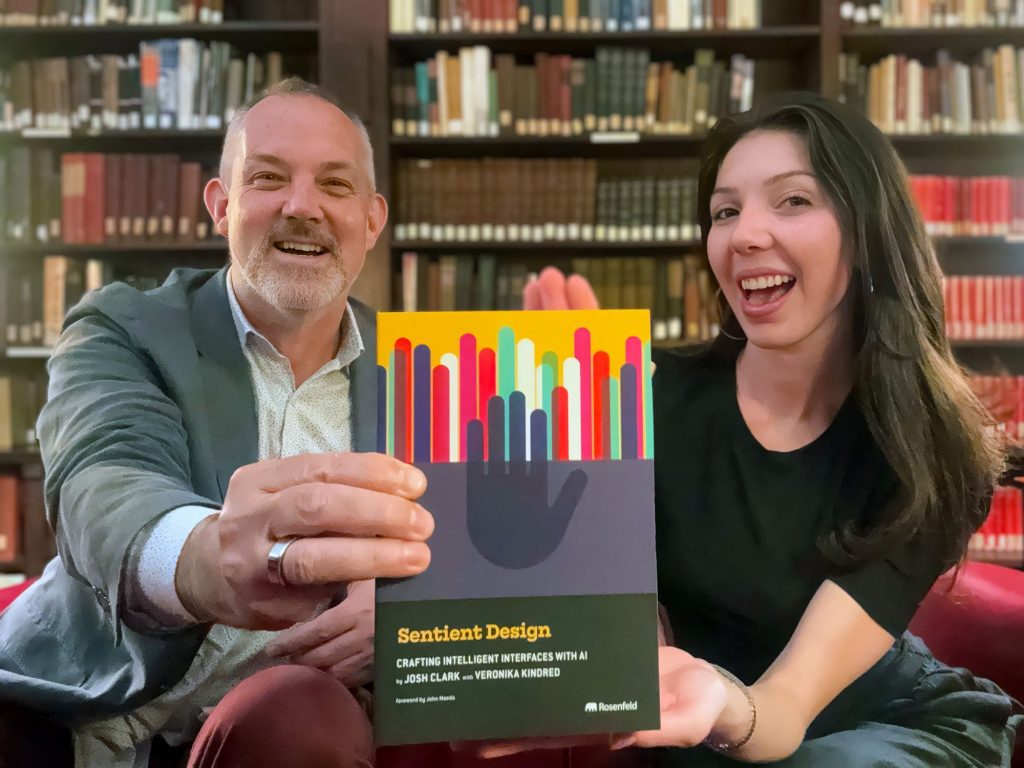
What is sentient design?
Sentient design describes the practice of creating digital experiences that crackle with awareness and agency, adapting to your users in the moment. These are intelligent interfaces: dashboards that design themselves, apps that manifest on demand, agents that just get it done, and much more.
Why write a book about sentient design?
Josh Clark and Veronika Kindred learned sentient design the hard way. But you don’t have to. Here’s what our authors have to say about it:
“Intelligent interfaces are emerging everywhere—digital whiteboards that turn sketches into applications, customer service agents that handle routine issues on their own, assistants that generate medical reports from a doctor’s spoken notes. Instead of using AI to wring savings by grinding out efficiencies, forward-looking teams are creating value through extraordinary new experiences.
This exploration has rippled across enterprise and startup alike, but the approach has been haphazard. There has been no map for this new territory, no uniform vocabulary, no framework for choosing what type of intelligent interface to create—or even what those types might be.
So, we started mapping. We named and identified new kinds of intelligent interfaces, and we organized their design patterns. Along the way, we discovered a broad expanse of experiences that goes far beyond chatbot clichés.
What began with a study of form led to something deeper: a practice for creating intelligent interfaces. This is Sentient Design. We created it because we needed it. We’re sharing it because we think you might need it too.”
P.S. To read chapter one of the book for free, go here »
How can I get started with sentient design?
First, you can pick up this book!
Josh and Veronika wrote this book as a guide to using AI as a design material. Because it’s not about tooling or replacing design tasks with AI. This book isn’t a framework filled with tips; it’s so much more. Sentient Design exists to give you (yes, you!) perspective and principles to create and deliver new products, with artificial intelligence in your toolkit.
Designers are at a crossroads right now. You can either stick with your tried-and-true tools, or embrace innovation and design experiences that truly come alive.
As Josh Clark said on the Rosenfeld Review podcast, “First we retool, then we reorganize to get our process around that. And then we invent.”
Listen to Josh and Veronika discuss what sentient design is, how it became so crucial, and why they wrote this book in this episode of the Rosenfeld Review podcast.
How is Sentient Design relevant to my design work?
Take it from John Maeda, author of How To Speak Machine and Laws of Simplicity and VP engineering at Microsoft CoreAI:
“I often say designers used to create obstacle courses for users, carefully crafted paths through menus and forms. Now, with AI, users just teleport to their goal. But the designer doesn’t disappear. The role transforms. You become creative director for systems that make real-time decisions, teaching principles rather than touching pixels.”
How does this impact my job? And what about when AI gets it wrong?
We get it; change is intense. That’s why Josh and Veronika answered questions just like these in the FAQ section of their book—available for free here!
Who would benefit from reading this book?
Sentient Design is for…
- Designers
- Product leaders
- Design-minded developers who want to create entirely new categories of experience with AI
This book helps you decide what to make and why it matters, giving you the patterns and process to conjure the next generation of AI-powered products.
Who are Josh Clark and Veronika Kindred?
 Josh Clark is principal of Big Medium, a digital agency that helps complex organizations design for what’s next. Josh has over 30 years of experience in emerging technology, user experience, and design innovation. His projects include future-friendly interfaces for AI, connected devices, and websites for many of the world’s biggest companies.
Veronika Kindred is designer and researcher at Big Medium, where she defines and solves design problems alongside some of the world’s biggest companies. She travels internationally to lead Sentient Design workshops and speak to teams at startups and Fortune 100 companies alike.
Ready to dive in? Order your copy of Sentient Design: Crafting Intelligent Interfaces with AI today!


