
What does the future of UX look like?
07/10/2026Is the role of UX/UI designer dead?
We’re here to tell you that the answer is a resounding no. Because UX isn’t dying; it’s shifting.
But how will user experience research and design change in 2026 and beyond? What does the future hold in store after years of accelerating change (hello, AI)? Let’s talk about it.
What is the future of UX design?
The future of UX design will be less about pushing pixels, and more about the end-to-end user journey.
As artificial intelligence continues to change the tech landscape, the industry will more strongly favor UXers with prowess in systems thinking, user psychology and behavior, adaptive design, and personalization.
Recently, we surveyed our audience to see what they think UX will look like three years from now. Here’s what they had to say:
“The title “UX designer” will start to disappear. Not because the work goes away, but because it blends even more into AI, product, data, and engineering. The people who succeed will be the ones who can move across those boundaries without needing the label.”
“Three years from now, UX will still be advocates for users and their human judgment will be more important than ever. The field of UX will meld together with service and systems design in a larger scale, as the AI tools will be sharper and work better as performing assistants for UX designers, doing the detailed UX design.”
“UX is the enterprise engine for how intent is interpreted, routed, and resolved across increasingly intelligent systems. As the field refocuses on human–computer interaction (HCI), Information Architecture (IA) resurfaces as the backbone providing object and relationship structures that enable adaptive, AI-driven, and personalized experiences.”
“Three years from now, UXRs will be training AI therapists, designing cities that reduce stress, building emotionally adaptive movies, teaching robot grandmas empathy, translating dolphin communication, and helping design Mars habitats. Somewhere along the way, “ux researcher” becomes a very old-fashioned job title!”
How will AI change UX in 2026 and beyond?
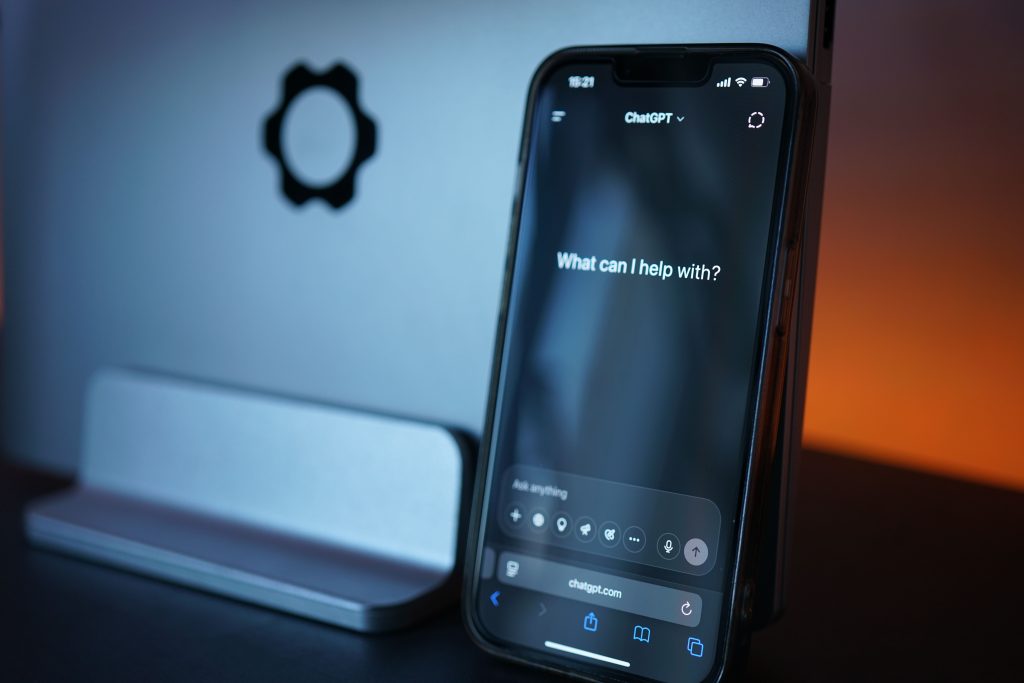
Artificial intelligence has been revolutionary in the tech space and beyond. But UXers have especially felt its impact. User experience has been turned on its head, because artificial intelligence changes some of the fundamentals of the user journey.
When a user navigates a website, they aren’t just trying to get from point A to point B. They trying to do so with the least amount of friction possible. And now, there might be an AI assistant ready to answer questions, make decisions, and customize results—ultimately trying to reduce friction in a whole new way. Jeff Gothelf has a great article on the impact of AI on UX that goes over this exact situation. Plus, you can watch him speak on more of this in his Advancing Service Design 2025 talk.
Here’s a few more ways that AI will affect UX:
1. Hyper-personalization will become the next big thing
From an increased awareness of context, to predictive interfaces, artificial intelligence will be used in ways that become increasingly personal to the user. Digital actions will be embedded into our lives through our phones, cars, homes, watches, and more. Online shopping experiences can be catered to specific interests and tastes, ever-changing and adapting based on pre-existing data.
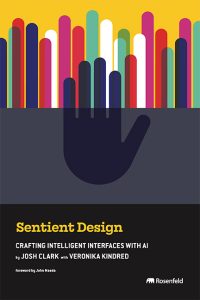
In the recently released book Sentient Design: Crafting Intelligent Interfaces with AI, co-authors Josh Clark and Veronika Kindred argue the importance of designing interfaces that adapt their content, style, structure, and behavior on the fly in response to user context and intent. And AI is the tool—nay, the design material—that you can use to do just that. Here’s what Josh and Veronika have to say on personalization being the next shift in UX:
“Intelligent interfaces promise to go beyond coarsely personalized experiences to deeply individualized encounters that are tailored to the user in the precise moment. This shift recognizes a fundamental truth: people aren’t the static profiles that traditional personalization imagines. Sentient Design goes beyond remembering preferences or tracking behavior patterns; it responds to immediate context.” (Sentient Design, 2026. Rosenfeld Media).
As artificial intelligence becomes more embedded into users’ everyday lives, expectations of digital and physical experiences will change with it. Think of coming home and your house automatically adjusts the lighting and temperature, or using a language-learning app that adjusts its lessons based on the accuracy of your answers. That’s sentient design in action.
Want to keep reading about it? The first chapter of Sentient Design is available here »
2. AI tools and plug-ins to streamline workflows
Artificial intelligence is changing the game, and companies like Figma and Adobe and embracing the transformation. With the advent of tools such as Figma Make, Uizard, and more, designers’ workflows have been turbocharged. You know we’re living in the future when you can create a request and it can get turned into a prototype in seconds.
Here’s a list of some tools and plug-ins that UXers have been raving about:
- Adobe Firefly: A suite of generative AI tools implemented into Adobe products that allows you to generate and edit video, images, vectors, and more.
- Claude Code: An agentic coding assistant that allows you to go beyond the copy and paste of the past. Claude Code works directly in your terminal to build and ship code seamlessly.
- Figma Make: Build functional prototypes with a line of code. This “prompt-to-app” technology allows Figma users to generate web apps from static designs and ideas.
- Miro AI: Use generative AI tools within Miro to generate notes, prototypes, and more. Plus, Miro AI allows you to instantly organize data, generate diagrams, and summarize threads.
- Uizard: Generate multi-screen, editable mockups and prototypes from text descriptions, hand-drawn wireframes, and more.
- UX Pilot: This design tool turns prompts and sketches to low-to-high-fidelity wireframes and screens. It also has a Figma plugin.
We see these tools only becoming more advanced, powerful, and reliable in the future. Do you agree? What tools are we missing? Let us know by commenting below.
3. UXers will hear more of “do more with less”
In a world where fully-formed websites can be created in minutes, designers are tasked with more and more responsibilities, paired with ever-shrinking budgets and resources. How can UXers balance what’s demanded with these constraints? Perhaps you take a route like Noz Urbina, who champions a proven methodology that leverages AI to craft personas and journey maps from incomplete data, which he has previously expanded upon in a Rosenverse community session. Either way, user experience professionals should prepare themselves to hear more of this instruction as technological innovations continue to impact the industry.
What is agentic UX, and why does it matter?
We asked the Rosenbot, and it said: “Agentic UX refers to designing experiences that empower users to take meaningful action, make choices, and feel in control—rather than simply following prescribed paths. This approach values user autonomy and self-efficacy.”
Agentic UX was touched on earlier in this article and we’re going back to it because it’s just that important. If you haven’t been preparing for the rise of sentient design, agentic UX, and all that comes with it, this is your sign to do so.
But what about agentic UX? There’s plenty of examples of agentic UX in action, such as LinkedIn’s Hiring Assistant, which helps recruiters through automated workflows through drafting messages, generating screening questions, and sourcing candidates. Agents like these go hand-in-hand with basic user experience principles: making users’ lives easier and reducing friction in their processes.
Christopher Noessel summed it up in a Rosenverse community session, “My Roomba vacuums while I’m at work. It does its work out of my attention.” Christopher also dives deep into chatbots, assistants, and more examples of this in his new book, Designing Assistant Technology: AI That Makes People Smarter.
What skills will UX designers need in the future?
This is the question UX designers have on their minds, and it’s exactly what we’ll be exploring at Shift UX 2026, our new in-person (and online) conference coming to New York City September 23-25. Here’s a few of the pillars that define the future of UX work that will shape the event:
Systems thinking
Of great importance is panning back from the UI to “big picture” thinking and practices—service design, systems thinking, information architecture, knowledge management—that can’t be commodified.
Research as strategy
In the future, we’ll see positioning of user research as high-value sense-making and leadership, rather than as a cost center that cranks out reports.
The rise of the Ops: DesignOps, ResearchOps, ProductsOps and more
New demands and new complexity require an ever greater level of coordination, and DesignOps, ResearchOps, ProductOps, and program management skills are needed to align people, tools, policies, and organizations.
Register now for early bird Shift UX tickets »
Get notified when the full conference program and speaker lineup drop »
What can I do to prepare for the future of UX?
Lucky for you, this post was filled to the brim with resources, including articles, books, videos, conferences, and more! We recommend joining us every week in the Rosenverse, too, as we discuss timely UX topics with experts in the industry every week!


