
Read chapter 1 of Sentient Design by Josh Clark & Veronika Kindred
06/03/2026Create experiences that crackle with awareness and agency, adapting to your users in the moment. Sentient Design is the practice of crafting intelligent interfaces: dashboards that design themselves, apps that manifest on demand, agents that just get it done, and much more.
And Sentient Design: Crafting Intelligent Interfaces with AI by Josh Clark and Veronika Kindred gives designers and product leaders the practical framework and imaginative perspective to deliver extraordinary new products using AI as a design material.
Read chapter one for free below!
Chapter 1
It’s Paris, 1905. The cobblestone street bustles with energy in the warm autumn light. You weave your way through a sea of top hats and overcoats to cross the boulevard, dodging horse-drawn carriages and early automobiles. As you round a corner, a grand cathedral looms into view.
It’s a century-old painting brought to life, animated by an AI-powered platform called Mirage 2 (Figure 1.1). Give the system any image and text description, and Mirage 2 turns your prompt into a world to explore. It feels like walking around a 3D video game, but this isn’t the prerendered map of a traditional game engine.

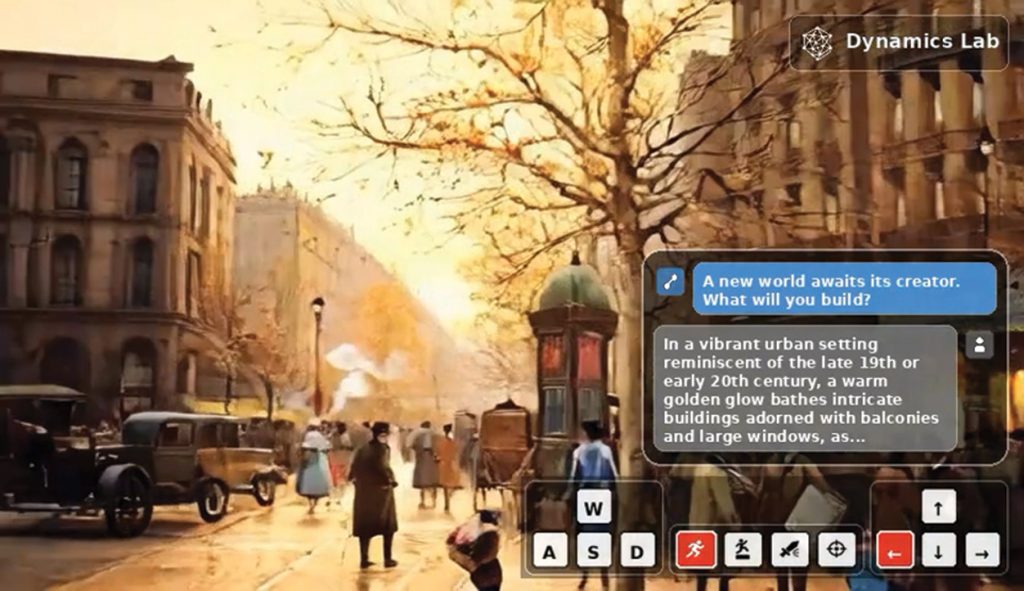
FIGURE 1.1 Mirage 2 turns a fin de siècle painting by Eugène Galien-Laloue (top) into an immersive world that’s created as you explore it (bottom).
Instead, this world is generated frame by frame in response to your actions. What’s inside that cathedral? Nothing, not yet. The interior won’t exist until you step through those doors. In fact, the cathedral itself didn’t exist until you turned the corner to see what was there.
Mirage 2 is a “world model” that creates its universe on the fly—an experience invented as you encounter it, based on your specific actions, and never the same for anyone else.
What if any digital experience could be delivered this way? What if websites were invented as you explored them? What if you could manifest apps on demand to meet your immediate need? What if digital systems behaved as flexible environments instead of rigid tools?
These questions aren’t speculative. They describe a new category of digital experience: the intelligent interface.
Awareness and Agency
Intelligent interfaces have awareness and agency to adapt in response to user context. They bend their content, medium, and behavior—even the system’s very goals—to meet the moment. These interfaces adapt to you instead of forcing the reverse. The result enables a new kind of collaboration between system and user—many new kinds, in fact.
Intelligent interfaces include enterprise dashboards that reshape themselves, or digital whiteboards that turn rough sketches into working applications. They feature agents that go off on their own to work on your behalf, or AI collaborators that work alongside you as “just another user.” We’ve identified over a dozen new experience patterns for intelligent interfaces, and we’ll share them all starting in Chapter 3, “The Sentient Triangle.”
Even conservative business applications can be radically adaptive in this way. Salesforce is a buttoned-up enterprise platform heavy with data dashboards, but it’s made lighter through the selective use of adaptive interfaces. Machine intelligence assembles certain dashboards on the fly, selecting and arranging precisely the metrics and controls to anticipate user needs (Figure 1.2). The underlying data hasn’t changed—it’s still pulled from the same sturdy sources—but the presentation is invented in the moment. The system is empowered to make simple design decisions, choosing from a curated collection of components from the Salesforce design system: familiar elements like cards, tables, and charts.
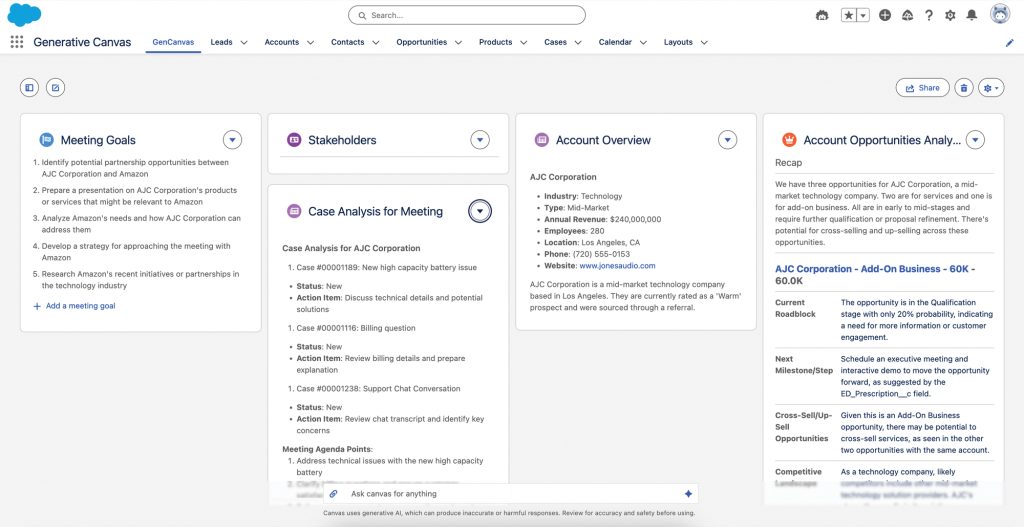
FIGURE 1.2 Salesforce’s “generative canvas” feature builds dashboards on the fly, assembling content and UI widgets based on both contextual cues and explicit prompts.
Users get layouts uniquely tailored to their immediate need, instead of wading through static templates built through manual configuration. Those real-time screens can be built for explicit requests (“what’s the health of the Acme Inc account?”) or for implicit context. The system can notice an upcoming sales meeting on your calendar, for example, and compile a dashboard with that client’s pipeline, recent communications, and relevant market signals. Every new context yields a fresh, first-time-ever arrangement of data.
The system pulls information toward the user instead of requiring them to scramble through complex navigation.
For users, the benefits of intelligent interfaces compound quickly. Individualized experiences that adapt in the moment increase satisfaction and efficiency. They foster understanding of complex systems by providing the right information when you need it. They promise empowerment through the creativity of newly possible interactions. And perhaps most exciting, these experiences can enable inclusivity by adapting to individual capability, inviting new audiences into activities where they previously didn’t have the ability to participate.
For designers, creating intelligent interfaces is a thrilling and consequential challenge. How do you design an experience that has no fixed path? How do you make such a fluid experience feel grounded, reliable, and intuitive? And how do you apply this intelligence in ways that elevate (not replace) human judgment and agency?
These are the questions that define the next era of experience design, and they demand a new perspective and process.
This Is Sentient Design
Sentient Design is the practice of creating intelligent interfaces. It provides the framework and philosophy to craft those experiences responsibly and effectively.
This practice is exciting, delicate, and a little bit weird—but not as weird as full-blown consciousness. The “sentient” in Sentient Design describes something more modest but powerful in its simplicity: systems that can perceive context, interpret intent, and act with agency to make meaningful design decisions on the fly. The resulting experiences feel almost self-aware in their ability to respond to the user.
To turn those concepts into practice, Sentient Design delivers a pragmatic toolkit of design patterns and repeatable processes. The focus is on the interface: how to use AI as a designer delegate that can make real-time decisions in content, presentation, and interaction.
NOTE: SENTIENT DESIGN AT A GLANCE
Sentient Design applies perception, interpretation, and agency to deliver intelligent interfaces that are…
- Aware of user context and intent
- Radically adaptive across content, structure, behavior, and medium
- Emergent and conceived in real time
- Collaborative in shaping the experience with the user
- Individualized to moment and context, not to stale profiles
- Deferential to human judgment, especially in consequential moments
- Continuous across interaction modes
Sentient Design also provides a measured view of AI—what it’s good at and where you should steer clear. While intelligent interfaces offer exciting opportunities, they also bring plenty of new risks and responsibilities. Care is required with experiences conceived in real time by systems empowered to make design decisions. This doesn’t “just work” by plugging AI into the interface. As interfaces become more intelligent, designers have to become more mindful, too. Throughout the book, we’ll take careful stock of what can go wrong, how to prevent those problems—and how to soften the blow when they happen anyway.
Take heart, though; the fundamentals are familiar. Machine intelligence has animated everyday interfaces for decades, long enough that the basics no longer seem special.
You likely encounter hundreds of services every day that are aware and adaptive, delivering just-for-you experiences. Your favorite streaming service, for example, is aware of your preferences and history and adapts content and presentation to match. The result is a playlist to suit your tastes, or maybe just the moment. Likewise, your phone’s predictive keyboard is aware of what you’re typing and adapts suggested content in anticipation of what you’ll type next. Ho hum, right?
What’s new is the degree and posture of this intelligence.
Machine intelligence has traditionally been something felt more than seen, an undercurrent powering everything from social feeds and product recommendations to your car’s auto-braking. But now machine intelligence has broken the surface (Figure 1.3). It’s no longer hidden below the waterline of digital experiences. With AI assistants and other generative tools, users interact directly with the algorithm. In addition to powering underlying systems, machine intelligence now guides the experience—and often becomes the experience, an intelligent interface as creative collaborator.
Chat experiences are the most familiar example of this direct interaction. Instead of chugging away as the engine under the hood, the algorithm has emerged as conversational peer. This direct exchange with the model not only changes how users interact with machine intelligence, but it also changes the arc of the entire journey.
Every comment and response in a chat can take the conversation in a new and unpredictable direction. User and system take turns shaping the experience, a one-of-a-kind path that meanders wherever the participants take it. Like any genuine conversation, the exchange can’t be designed in advance; it is ephemeral, created for the moment.
Sentient Design explores what’s possible when any interface—not just chat—can be so open-ended and radically adaptive.
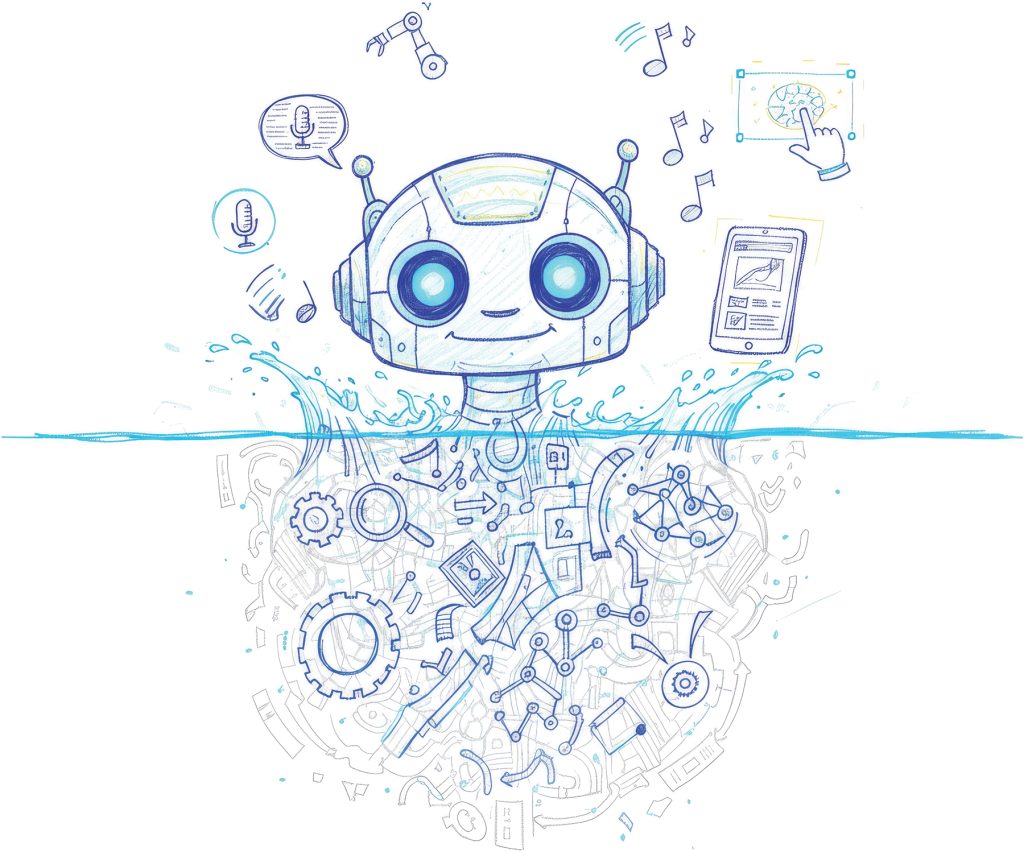
FIGURE 1.3 Machine intelligence has surfaced, moving from background systems to the direct interface for a growing number of experiences.
Beyond the Bot
Sentient Design goes beyond narrow visions of conversational interfaces. Intelligent interfaces are much more (and in some exciting ways, much less) than talking machines … or systems that can write, draw, make music, or otherwise do things that until recently seemed uniquely human. Any of those feats might be part of an intelligent interface, but they’re not essential to it.
Instead, the spark of machine intelligence can animate any interaction model. Sentient Design proposes embedding this intelligence into many, many experiences. That’s critically different from the reverse: embedding all experiences into a single intelligence. Some imagine a near-term future where all applications are swallowed up by a few super-smart systems that “do it all.” In that model, a centralized intelligence subsumes all software: ChatGPT takes over the world, a single interface to do everything.
Sentient Design instead envisions a world of distributed intelligence, with capabilities embedded in thousands or millions of software and hardware systems. Rather than a small set of “ask me anything” assistants, we anticipate a proliferation of intelligent interfaces that take countless forms, each aware and radically adaptive (Figure 1.4). In this future, machine intelligence lives inside all of them, just like electric motors power tons of everyday appliances and databases support nearly every piece of software.
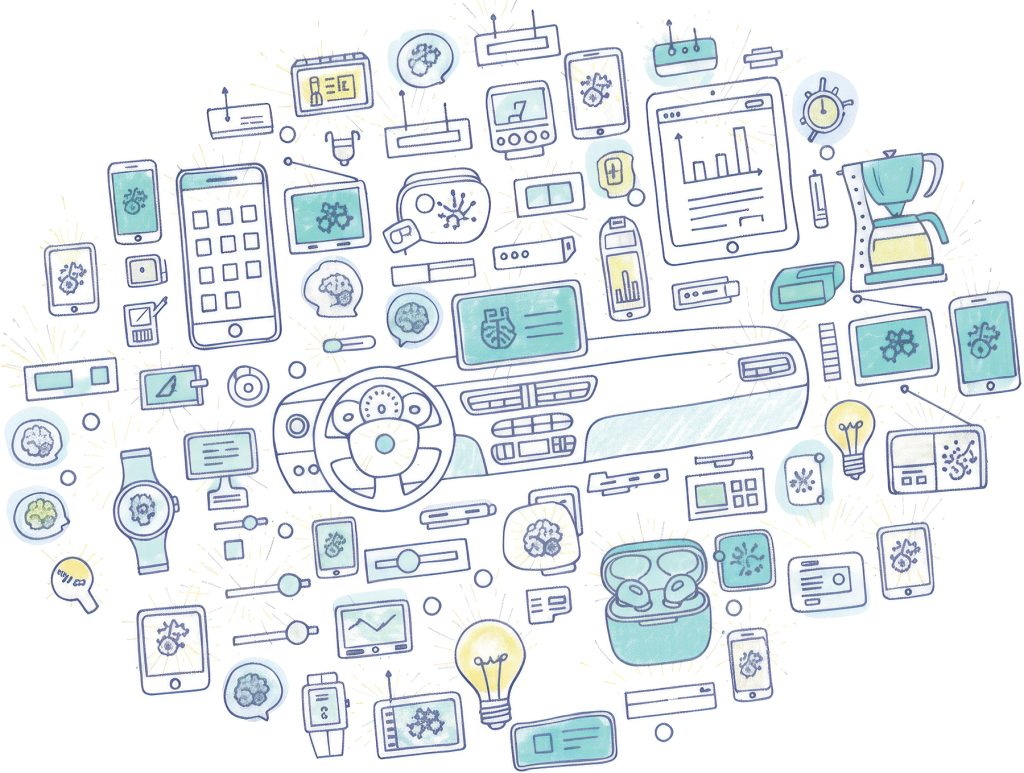
FIGURE 1.4 The future isn’t one big brain, but countless sparks of intelligence lighting up everyday experiences.
What becomes possible when you can weave intelligence into any interface or feature? This provocation invites designers to explore interaction models well beyond text dialogue or even the generative interfaces we’ve already described.
This infusion of intelligence can be a light sprinkling that gives special talents to traditional controls or web forms. Or it might be a heaping portion of savvy that creates an entirely new interaction where the system itself plays an active and creative character in the plot. We’ll dig deep into the details of what this looks like throughout the book, but let’s take a quick tour, starting at the “light” end of that spectrum.
Casual Intelligence
Not every intelligent interface has to be revolutionary. Casual intelligence drizzles machine smarts onto everyday content and interface elements. Small interventions add up to interfaces that are quietly aware and adaptive, easing friction in routine interactions without introducing new paradigms.
Consider the possibilities for the old-school web form. Every time you add a question in the Google Forms survey tool, for example, you have to choose from a dozen answer formats to use: multiple choice, checklist, linear scale, and so on. It’s a necessary but heavy bit of friction. To ease the way, Google Forms sprinkles machine intelligence into that form field. As you type a question, the system suggests an answer type based on your phrasing. Start typing “How easy is it …,” and the default answer format updates to “Linear scale” (Figure 1.5).
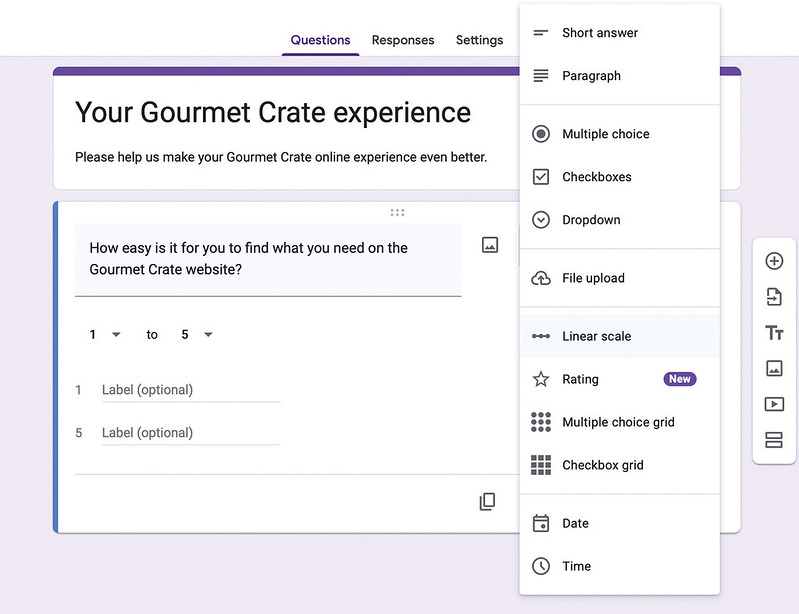
FIGURE 1.5 Google Forms prompts you to select from 12 answer formats for every question. Machine intelligence eases the way by suggesting a default (here, linear scale) as you start typing the question.
Under the hood, machine learning categorizes that half-written question based on the billions of other question/answer pairs that Google Forms has processed. The interface doesn’t decide for you, but it tees up a smart default as an informed suggestion.
As operating systems make on-device models available to applications, casual intelligence becomes a “why wouldn’t we?” thing. iPhone apps, for example, can use the phone’s onboard models to do things like summarize content, propose content titles, and tag categories. All of this is local to the phone, making it private intelligence that comes free on the device.
But don’t feel limited to the humdrum. Casual intelligence can ease even complex and high-stakes domains like health care. You know that clipboard of long, redundant forms you fill out at the doctor’s office to describe your health and symptoms? The Ada Health app uses machine intelligence to slim that hefty one-size-fits-all questionnaire and turn it into a focused conversation about relevant symptoms. The app adapts its questions as you describe what you’re experiencing. It uses your description, history, and its own general medical knowledge to steer toward relevant topics, leaving off-topic stuff alone. The result is at once thorough and efficient, saving the patient time and outfitting the medical staff with the right details for a meaningful visit.
Sentient Design begins with commonplace human needs. Your journey will eventually take you to new, mind-bending interaction paradigms, but start with what you know. As you design the familiar interactions of your everyday practice, start asking yourself how the experience could be made better with a pinch of awareness and a dash of casual intelligence. Think of features that suggest, organize, or gently nudge users forward without demanding much thought or effort. Small improvements add up.
But casual intelligence is just the beginning. When you dial up the awareness and agency, something more transformative emerges.
Radically Adaptive Experiences
Radically adaptive experiences change content, structure, style, or behavior—sometimes all at once—to provide the right experience for the moment.
This is not exactly ye olde website. For designers and users alike, the risk of radically adaptive interfaces is that they turn into robot fever dreams without shape or destination. That’s where intentional design comes in: to conceive and apply thoughtful constraints and guardrails that keep the experience coherent and the user grounded.
The earlier Salesforce example provided a taste of this, creating dashboards on the fly by choosing from a small collection of available UI patterns. This is a conservative and reliable approach to the bespoke UI experience pattern, one of Sentient Design’s 14 experience patterns. Bespoke UIs compose their own layout in direct response to immediate context. This approach relies on a stable set of interface elements that can be remixed to meet the moment.
NOTE: IS THIS “GENERATIVE UI”?
Some people use the term generative UI to describe interfaces that assemble or rearrange their own layouts. That’s not wrong, but it’s overly broad. All of Sentient Design’s 14 experience patterns are generative in some way, assembling content, structure, or behavior on the fly. “Bespoke UI” refers to a specific expression of that idea: interfaces that generate their own structure and UI elements.”
The bespoke UI pattern can support more open-ended scenarios beyond dashboards. Google’s Gemini team developed a prototype experience that deploys a bespoke UI inside a chat context—but it doesn’t stay chat for long. The demo starts by asking for help planning a child’s birthday party. Instead of a text reply, the system responds with an interactive UI module—a purpose-built interface to explore party themes (see Figure 1.6). Familiar UI components like cards, forms, and sliders materialize to help you understand, browse, or select the content.
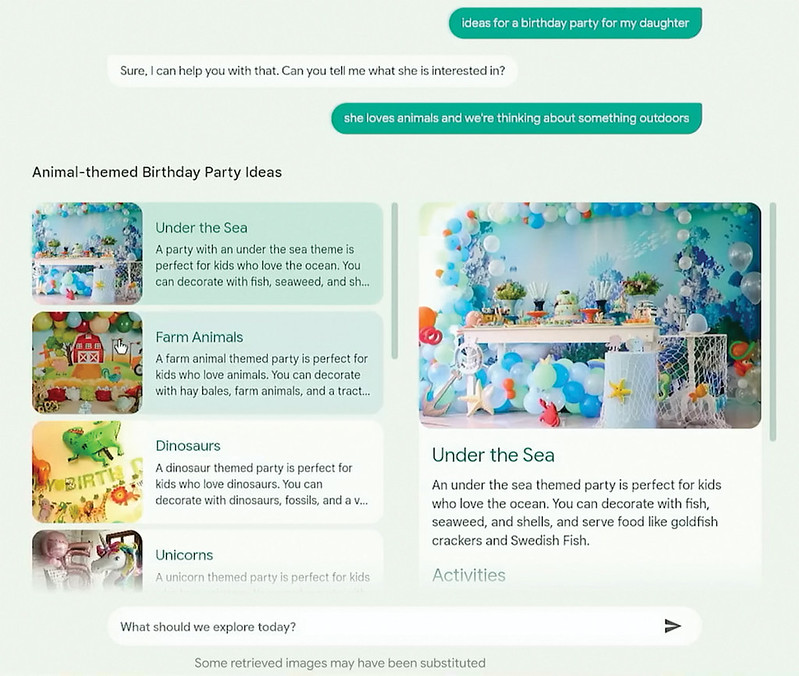
FIGURE 1.6 Google’s bespoke UI prototype conceives UI elements on the fly to replace traditional dialogue responses in chat.
Although the UI elements are familiar, the path is not fixed. Highlighting a word or phrase in the Google prototype triggers a contextual menu with relevant actions, allowing you to pivot the conversation based on any random word or element (Figure 1.7). This blends the flexibility of conversation with the grounding of familiar visual UI elements, creating an experience that is endlessly flexible yet intuitive.
This prototype eventually evolved into something even more ambitious, a feature called Dynamic View that spins entire custom web pages in response to questions you ask of the Gemini assistant. The presentation may be more complex—rich layouts instead of one-off components—but the principle is the same: the intelligent interface responds with the composed interface that’s best suited to the content.
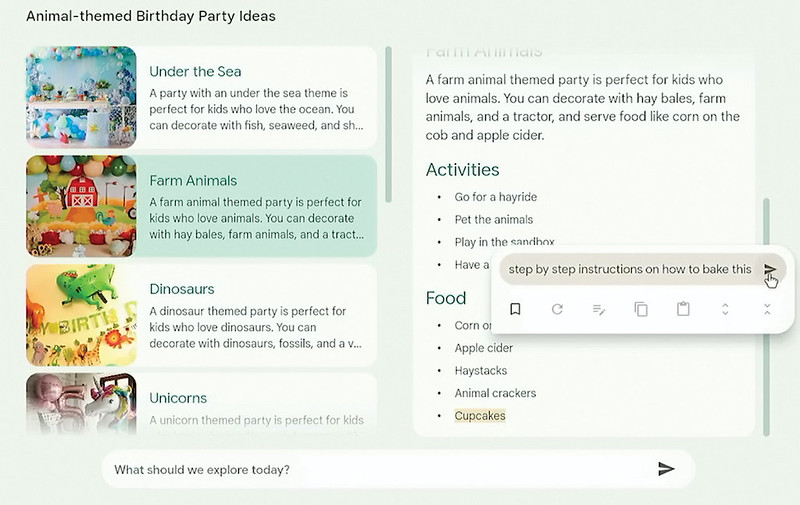
FIGURE 1.7 Select any arbitrary word or element (“Cupcakes” in this example), and you can ask the system to use your selection as a base to veer off in a new direction—to get the recipe, for example.
Successful bespoke UI experiences rely on familiarity and a tightly constrained set of UI and interaction patterns. Design systems and content systems become more important than ever in this context, providing the coherent building blocks that keep these adaptive experiences from spinning out of control. The Gemini example succeeds because it has a limited stable of UI widgets in its design system, and the system was taught to match specific patterns to specific user intent. Experiences like this are open-ended in what they accept for input but disciplined in the patterns they produce.
The same principles and opportunities apply beyond graphical UI, too. Walkcast is an individualized podcast, applying the bespoke UI pattern to an audio format that is typically fixed and scripted. The app tells one-of-a-kind stories seeded by your physical location. While other apps have attempted something similar by finding and reading Wikipedia entries, Walkcast goes further and in new directions. The app weaves those location-based facts into weird and discursive stories that leap from local trivia to musings about nature, life goals, local personalities, and sometimes a few tall tales. There’s a fun fractured logic connecting those themes—it feels like going on a walk with an eccentric friend—and the more you walk, the more the story expands into adjacent topics. It’s an example of embracing some of the weird unpredictability of machine intelligence as an asset instead of a liability. It’s an experience that is unique to you, radically adaptive to your physical location.
All of these bespoke UI examples present and arrange content according to a fixed set of options. Things get even wilder when you let the user define (and bend) those rules to create the universe they want. You’ll explore the frontier of these most radically adaptive of experiences with the intelligent canvas in Chapter 6, “Chat Is Not All Talk”—an experience pattern that lets users create their own interfaces or even conjure their own applications.
This quick survey is just a teaser of Sentient Design’s broad spectrum of intelligent interfaces, from quietly helpful web forms to imagined-on-the-spot applications. These are the book-end extremes of a sprawling range of possibilities. In between, you’ll discover chat interfaces, focused tools for specific tasks, autonomous agents that coordinate with other systems, and copilots that quietly support your work with gentle suggestions. The full landscape is vast, and we’ll explore it systematically starting in Chapter 3.
Conceived and Delivered in Real Time
These intelligent interfaces create fundamentally emergent experiences that arise organically from interaction between user and system, often in ways that weren’t specifically designed or even imagined. Sometimes that collaboration is explicit (“make the game harder”) and sometimes implicit (the system notices you’re ready for a new challenge). It’s the same goal in both cases: to deliver meaningful change by providing exactly the right experience at precisely the right moment.
This is a big shift. Over the last few decades, the prevailing method to discover content and applications has evolved from search (“the thing I want must be out there”) to social curation (“these people always have things I like”) to algorithmic recommendation (“TikTok knows what I want better than I do”).
Now this new era of interaction design introduces manifestation. On-demand content, code, images, and music are already here. Describe the thing you want, and the answer or artifact appears (Figure 1.8). In fact, thanks to the awareness and anticipation of these systems, you may not even have to ask at all. The boundary between user and creator begins to dissolve.
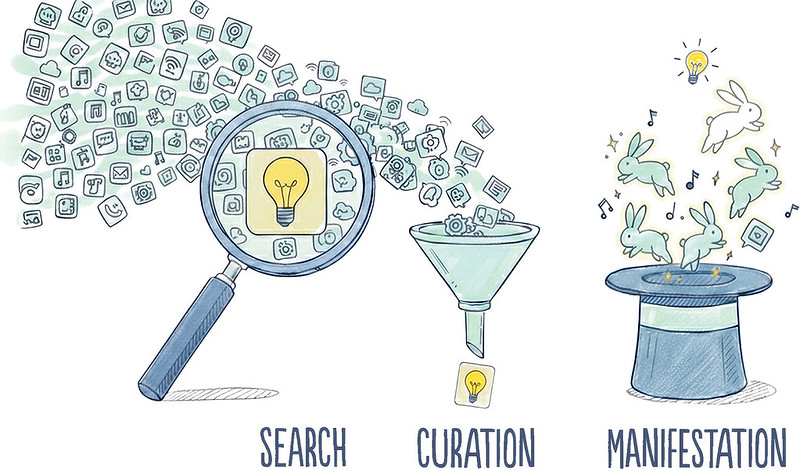
FIGURE 1.8 As interfaces evolve from search to curation to manifestation, the boundary between finding and making software may dissolve.
This is powerfully flexible but also powerfully unpredictable. When unpredictable humans mix with the quirky logic of machine intel- ligence, you can’t anticipate every possibility. Yet it’s still possible to keep these experiences grounded within certain rules that the system must observe. When Mirage 2 invents an entire Paris city block the moment you turn a corner, it still follows the city’s architectural conventions, gravity still applies, and horses still canter like horses.
As the designer of the intelligent interface, you’re the one who establishes the sticky rules and guidelines, the physics of the universe you create for the system and its users.
JOSH’S TAKE: EPHEMERAL EXPERIENCES
 The whole point of radically adaptive experiences is that they are conceived on demand. By the same logic, they don’t have to stick around when the demand passes. Get comfortable with the idea of ephemeral experiences: content, interfaces, or even entire applications that you spin up for one-time use and then set aside.
It sounds unsettling. Usability best practices emphasize consistency and predictability. Presentations and interactions that come and go sound like the exact opposite, an anti-pattern. But when ephemeral experiences are optimized for the current moment, they often feel more intuitive, not less. The right experience at the right time is, well, always right—even if it’s unique and temporary. Predictability and wayfinding still matter, but the path doesn’t have to be static, and it’s okay to let it fade from view until you need it again.
This shift to ephemeral experiences changes how to think about iteration and improvement. Instead of refining a single, persistent interface over time, the work becomes building systems that get better at understanding context and generating the appropriate response.
A New Role for Designers
Traditionally, it’s been the designer’s job to craft the ideal journey through the interface, the so-called happy path. You construct a well-lit road to success, paved with carefully chosen content and interactions completely under your control. That’s the way interface design has worked since the get-go.
Not anymore, or at least not entirely. With Sentient Design, the designer allows parts of the path to pave themselves, adapting to each traveler’s one-of-a-kind footsteps (Figure 1.9). When you deliver an intelligent interface with the awareness and agency to make design decisions on the spot, the happy path gives way to happy possibilities.
“We’ve moved from designing ‘waterslides,’ where we focused on minimizing friction and ensuring fluid flow, to ‘wave pools’ where there is no clear path and every user engages in a unique way,” says design strategist Alex Klein.
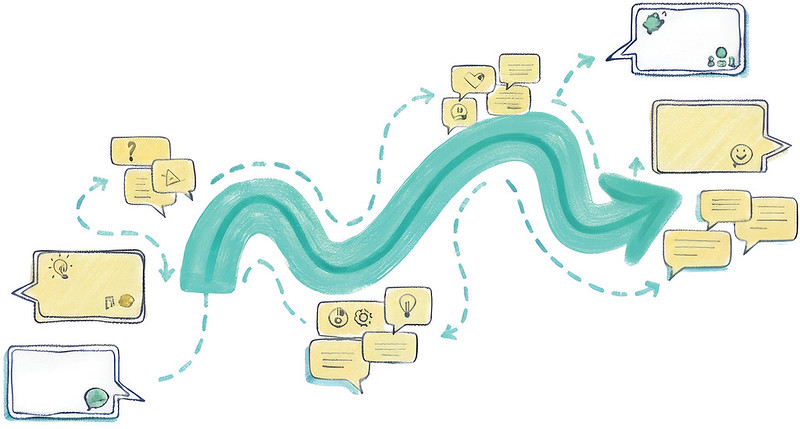
FIGURE 1.9 Like meandering conversations, intelligent interfaces often follow unpredictable trajectories that are defined by the “conversation” between the user and system.
If the interface is making real-time design decisions, then who’s the designer here? It might seem confusing: Is Sentient Design about the design of intelligent interfaces? Or is it the reverse: Intelligent interfaces that do design?
The answer is both. Sentient Design is a design practice for creating systems that can, in turn, design their own moment-to-moment experiences. Systems design becomes primary over tactical UI design.
As the designer creating the system, you become its creative director. You give the system the brief, the constraints, and the design patterns to use. What patterns can the system use, and when? How should it choose among them? What tone or manner should it adopt? The work is behavior design . . .not only for the user but for the system itself.
The interface then uses that foundation to compose the experience dynamically in response to each user and their context. It’s like teaching someone cooking fundamentals instead of handing them a recipe; you provide the principles and techniques and then step back to see what dishes they come up with. We’ll dig into specific examples in Chapter 6, and Chapter 12, “The Sentient Design Sprint.”
Just don’t get so lost in the machinery that you lose sight of the user. What puts the “intelligent” in intelligent interfaces is their awareness of context and their ability to interpret user intent. As the designer, your job is to provide the system with guidance for how to translate that interpretation into action in real time. This requires a fresher perspective of the user than traditional software design has—and also requires far less user surveillance than traditional personalization.
From Personalized to Individualized
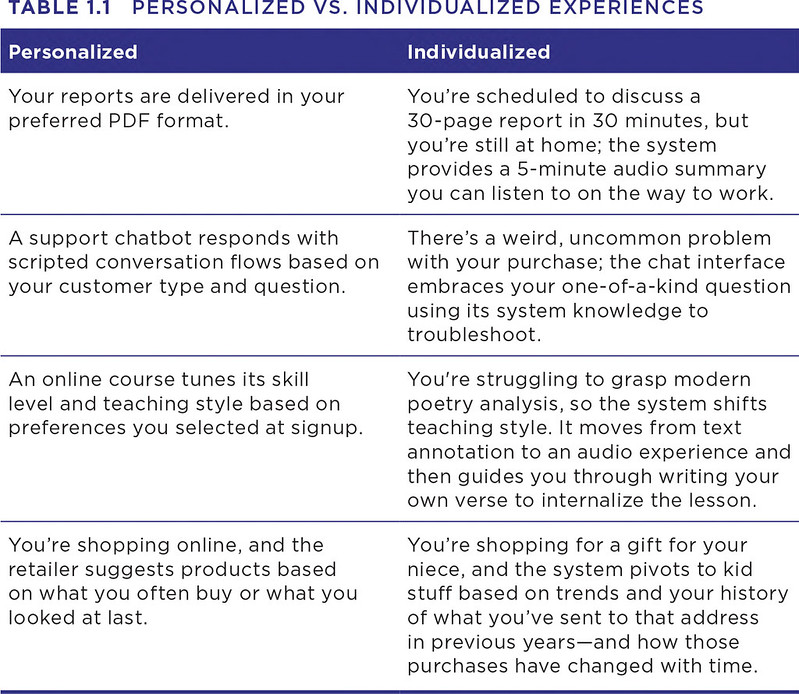
Intelligent interfaces promise to go beyond coarsely personalized experiences to deeply individualized encounters that are tailored to the user in the precise moment. This shift recognizes a fundamental truth: people aren’t the static profiles that traditional personalization imagines. Sentient Design goes beyond remembering preferences or tracking behavior patterns; it responds to immediate context (Table 1.1).
How do you approach designing for this moment of one? Can traditional UX methods keep up? Thinking tools like personas and journey maps have long given designers representative views of user needs, motivations, and mental models. In a multiverse of individualized experiences, a handful of personas might suddenly seem too thin to cover the possibilities.
Give these stalwart tools their due. Understanding core user needs and mental models becomes more crucial when designing individualized experiences. Think of personas as guideposts for understanding contexts and mindsets—not guardrails for building rigid paths and interactions. Use these tools to identify the moments where flexibility can make the difference and understand the boundaries of acceptable adaptation.
Traditional design builds a fixed understanding of the user, a snapshot you reference as you design. But individualized experiences demand a fluid theory of the user that accounts for shifting contexts, changing needs, and the reality that today’s goals may contradict yesterday’s patterns. Start with an archetype but build from there.
The goal isn’t to capture every user preference or map every path; you just have to help AI develop broad cues for action. Even general- purpose large language models often have enough world knowledge to make good decisions based on limited context. World knowledge is the statistical shadow of human experience that these models have through their vast exposure to data. The models don’t have to know everything that you do because they have good instincts of what people in general will do. With a designer’s specific guidance about common personas—often combined with proprietary data—AI can use its world knowledge and contextual signals to illuminate immediate user needs, without invasive personal surveillance.
Respectful, Collaborative, and Deferential
Separating individualization from data exploitation underscores the careful respect that Sentient Design demands. The awareness and agency of intelligent interfaces make them powerful—which is precisely why thoughtful boundaries matter. Sentient Design is as much about what these systems don’t do as what they can do. Respectful experiences are collaborative and deferential, working with you rather than imposing on you.
THE PERSONALIZATION MYTH
Traditional personalization assumes that if you collect enough data to build a perfect profile, you can deliver a perfect experience. But profile- based personalization often fails because it prioritizes who you were over who you are right now. The “you” who googles “fix water leak” at 2 a.m. is very different from the person drafting a board presentation at 2 p.m. Reader, you contain multitudes.
The result is targeted ads or personalized feeds that reflect a lowest- common-denominator version of you, a muddy mix of your interests that rarely reflect your interests right now. You might want news in your feed in the morning, but by evening all you want is viral dance videos and babies tasting lemons for the first time.
Most companies don’t have the user base to gather meaningful profile data in the first place. “I’ve talked to people at pre-launch startups with fewer than 100 users who say, ‘We’re going to start on personalization,’” says Amanda Richardson, formerly Hotel Tonight’s data and strategy chief.
Either the profile is too slim, or the user has to slog through an obstacle course of manual preferences. Instead, general world knowledge paired with the user’s immediate context is often plenty to deliver tailored results that are perfect for the moment—no profile needed.
“Maybe my last booking was a luxe hotel. It was the weekend. It was my anniversary,” Richardson continues. “But if I show up in New York City for work and book a luxe, that expense report is getting rejected. Day of week matters. Time of day matters. If you’re booking at 11 o’clock at night, you really don’t care if they have a spa, right? All of those factors matter far more than the individual user.”
You don’t have to know a person’s whole history to build a strong theory of the user based on how everyone behaves in the specific context.
Our client, People Inc., demonstrates this with their D/Cipher ad platform, which serves super-relevant ads without any profile tracking at all. The company uses audience behavior (not individual behavior) to do the trick: people moving through the same content and context tend to have the same need. That 2 a.m. search about water leaks provides a strong enough clue without knowing the user’s history or demographics.
“This real-time reasoning is much more valuable than backward-looking personalization, which is always a day late and a dollar short,” says People’s Chief Innovation Officer Jonathan Roberts.
There’s an art to creating proactive systems that offer suggestions or act on your behalf, but that still leave you in charge. The casual intelligence of Google Forms is proactive, for example, when it quietly suggests the right answer format before you even finish your question. But it doesn’t make the decision for you, instead setting a new default value that’s waiting for you when you get to that /eld. (That’s copilot behavior; see Chapter 9, “Copilots and Uncharted Territory,” for more about copilots.)
As the designer, your job is to treat machine-generated results as signals rather than facts. When acting on an anticipated need, the system should defer to the user to make or redirect the decision. A mapping app that suggests an alternate route should propose the route, not impose it—and offer context for the driver to decide the pros and cons.
We’ll explore many patterns for establishing trust, transparency, and consent, but the point is not to make the user into a micromanager of everything the system does. Indeed, intelligent interfaces can and should quietly absorb and execute lots more complexity than traditional systems ever could. When a user tells an intelligent canvas to create an on-demand application, for example, they’re still initiating the action—but the system proactively handles all the complexity of creating that experience. The user leads with what they want, and the system has the intelligence to manifest it. The user explains the what, and the system figures out the how.
This careful blend of collaboration and deference affects not only manner but mode. Radically adaptive experiences are multimodal, shifting fluidly between GUI, voice, camera input, or physical interaction based on what makes sense in the moment. This affects the app’s interaction as well as the format of the content it delivers—do you need that report as long-form prose, presentation, or audio summary?
The point of interaction can change, too, leaping between devices or affecting an external system. When you receive a call while driving, your car answers—not the phone—and you speak into the car’s cockpit. When you park, the call shifts to your phone, and you just carry on. This is deferential interaction, the system bending to your context.
The most respectful interfaces are transparent about their reasoning, present uncertainty clearly, and offer paths to escape or override decisions. They make users more capable, not more dependent.
This is the relationship you establish as the designer and the contract at the heart of Sentient Design: Intelligent interfaces have the aware- ness and agency to make meaningful decisions, but they defer to human judgment at every consequential moment.
If this all sounds simultaneously exciting and overwhelming, take heart. While Sentient Design introduces new patterns and possibilities, it builds on familiar foundations. The principles of good user experience—clarity, consistency, sharp mental models, user focus and user control—remain as important as ever.
What does change is the material you work with and how you apply those principles in a more fluid context. Now that you’ve gotten a glimpse at the opportunities and challenges of what you can build, it’s time to understand the material itself: what machine intelligence is made of and what it can do.
Excerpt From Sentient Design: Crafting Intelligent Interfaces with AI by Josh Clark & Veronika Kindred. Rosenfeld Media, 2026.


