
Why these UXers left tech for greener pastures
04/30/2026Many of us have been in the User Experience (UX) industry for quite some time—long enough to undergo major career pivots or even exit the field altogether. Change is always fascinating, and we think you’ll really enjoy this collection of Rosenverse Exit Interviews, curated by Uday Gajendar.
If you’ve been asking yourself the questions…What can I do after UX? What career paths are relevant for me as a UX designer? Is there a role out there for me beyond tech?
…Then this playlist is for you.
Exit Interview #1: Greg Petroff: From Silicon Valley Executive to Sonoma County Possibilitarian
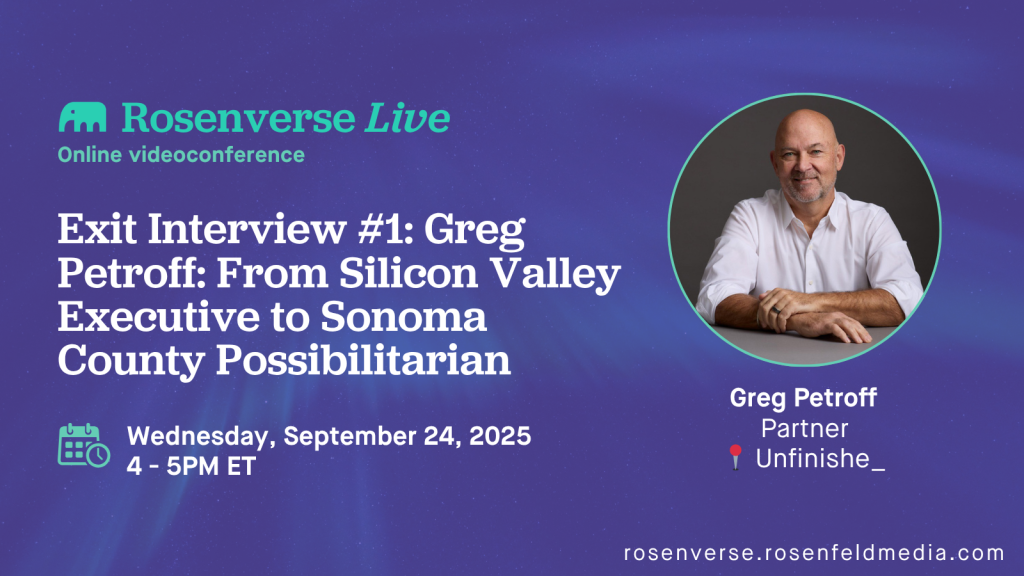
“The tools are more important than ever even if the title UX becomes less central.”
After years leading design at Google, ServiceNow, and Cisco, Greg Petroff made a bold move—leaving Silicon Valley for Sonoma County and traditional corporate leadership for fractional executive work. Now building two consulting practices while serving as fractional CDO for a fintech startup, Greg embodies what he calls being a “possibilitarian”—seeing opportunity in moments of change. We’ll explore his transition to the emerging world of fractional leadership and how he’s helping organizations navigate our AI-infused moment. Watch the recording »
Q: Why are more leaders moving into fractional roles?
A: Fractional work gives experienced leaders a way to stay impactful without committing to a single full-time executive seat. It can be a better fit when you want more autonomy, more variety, and a way to help companies that are ready for targeted leadership.
Exit Interview #2: Rediscovering the ethical heart of design
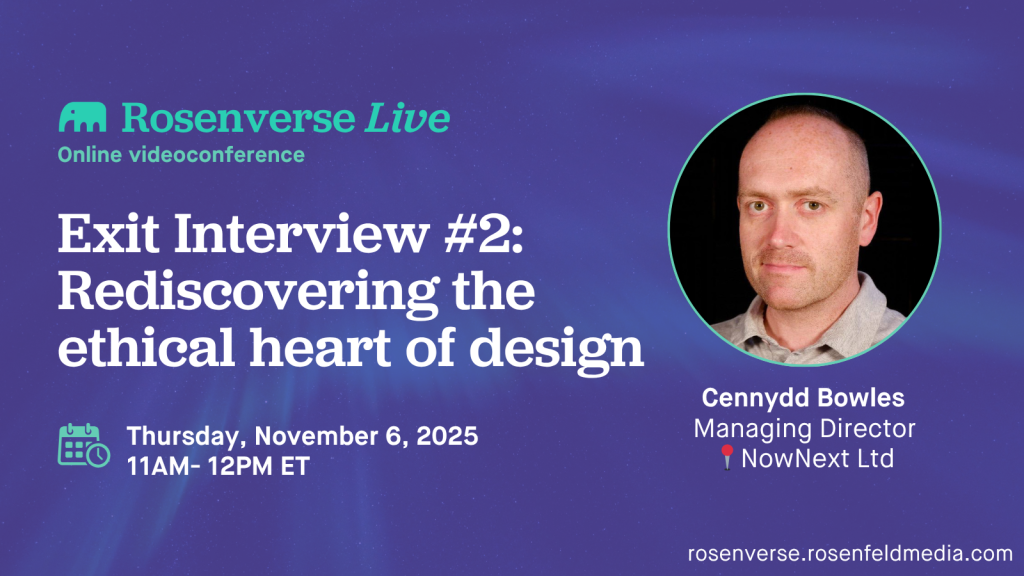
“Design permeates everything as a lens through which you see the world; philosophy is just a different shaped lens.”
After two decades in Product Design, Cennydd Bowles is stepping away — not out of burnout, but disillusionment. The craft that once sought to elevate human experience now too often serves the false gods of metrics and efficiency, while the industry eagerly embraces approaches that lead to its own commoditization. Cennydd shares why he’s stepping away from the tech industry, what he’s learned about doing design responsibly in a system obsessed with mechanical efficiency, and how his next chapter—studying deception and morality in AI—might still bring us back to what design was meant to be. Watch the recording »
Q: What does “the ethical heart of design” mean?
A: It means remembering that design is ultimately about people, not just outputs, metrics, or speed. Ethical design asks whether what we create is helpful, fair, respectful, and aligned with the kind of world we want to build.
Exit Interview #3: Same as It Ever Was: What Leaving Tech Taught Me About Change
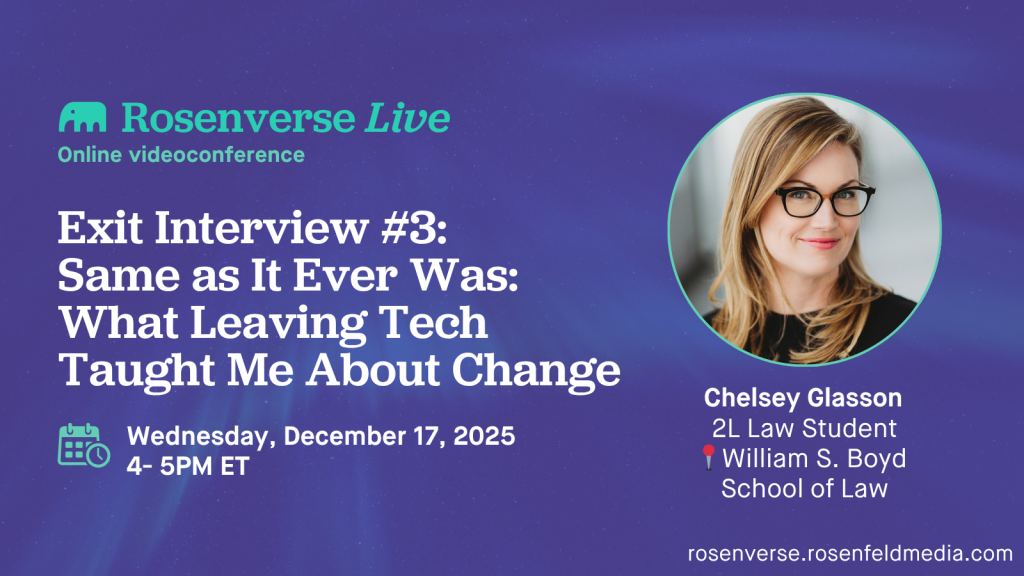
“Moving into law felt like starting over, but reframing it as a UX challenge made it manageable.”
After more than a decade of exploring the world as a user experience researcher, Chelsey Glasson found herself at a crossroads: continue in a traditional user research role or venture into something new. She chose the latter. Today Chelsey is in the early stages of a legal career, having just wrapped up her second year of law school. Remembering how scary it initially felt to even consider a career pivot, she’s excited to share why she made a change, some of the humbling and sometimes funny moments along the way, and how the skills she developed in UX continue to set her up for success today. Whether you’re contemplating a transition of your own or just curious about what a non-traditional UX-to-something-else journey can look like, Chelsey’s story offers insight, encouragement, and a bit of validation for wherever you are on your career path. And if you’re considering a change, know you’re not alone. There’s a whole community out here, cheering you on and excited to provide insight and empathy. Watch the recording »
Q: What does tech culture get wrong about careers?
A: Tech often encourages short-term performance cycles and constant calibration, which can make it hard to think about long-term career health. That environment can also intensify pressure around age, stability, and staying competitive.
Exit Interview #4: From Product Design Leadership to Sound Healing
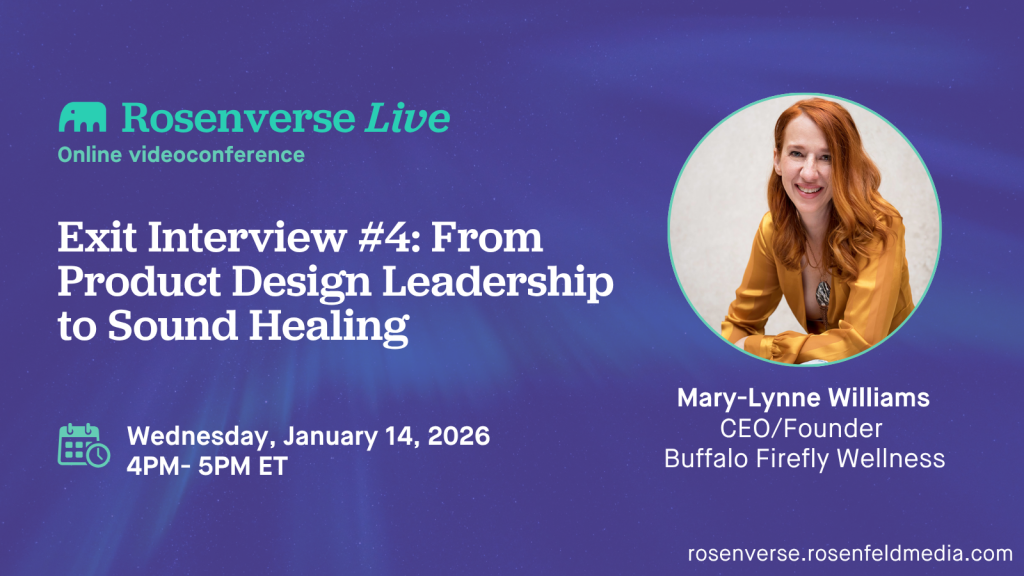
“I wanted to be in a place where I was making people feel better, not worse.”
Mary-Lynne Williams is the founder of Buffalo Firefly, a sound-healing and wellness company operating in Richmond, VA and Brooklyn, NY. Before stepping into this work, she spent over two decades in the tech industry as a product design leader, including roles at Microsoft, Meta, and Zillow, where she shaped complex digital products, led teams, and worked at the intersection of systems thinking, user experience, and human behavior. Her career in tech was successful by every external measure. Yet over time, Mary-Lynne began to recognize a growing disconnect between the work she was doing and the way she wanted to live in her purpose. She creates intentional spaces for rest and has recently opened a second location of her Sound Healing Center in New York City. Her story is not about leaving ambition behind, but about redefining success—trusting discernment, and choosing work that feels sustainable not just intellectually, but physically, emotionally, and spiritually as well. Watch the recording »
Q: What advice do you have for someone considering a major career pivot?
A: Trust your intuition and take yourself seriously. If something feels wrong in your body or life, that is information worth listening to, especially when you are considering a big transition.
Exit Interview #5: Designing My Life After Tech
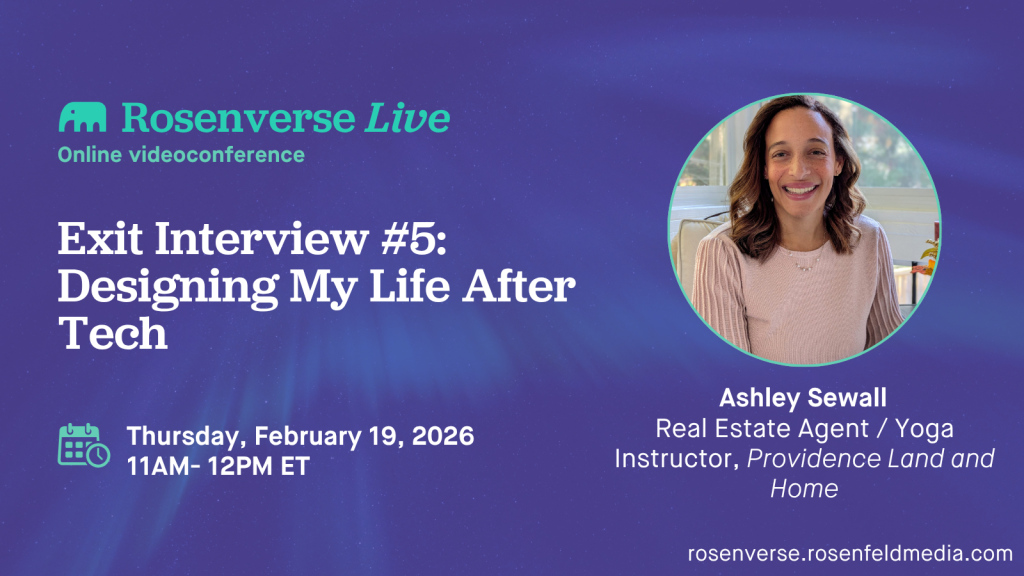
“If you are questioning your path, that’s data. It’s a sign something needs to evolve and that’s okay.”
What happens when the career you worked hard to build no longer fits the life you’re living? In this session, Ashley Sewall shares her decision to step away from senior UX leadership and the questions that followed. She reflects on burnout, identity, ambition, and the often-unspoken pressures of staying in tech—and explores what it looks like to apply design thinking to your own career. This is not a story about quitting, but about redesigning work to better align with values, health, family, and curiosity. Watch the recording »
Q: What does it mean to design your life after tech?
A: It means treating your next chapter the way a designer would treat a problem: by exploring options, testing ideas, and making intentional choices instead of drifting into the future by default. It’s about building a life that fits your values, not just your résumé.
Exit Interview: 20 Years of Tech, One Very Big Bet, and a Lot of Heat Pumps
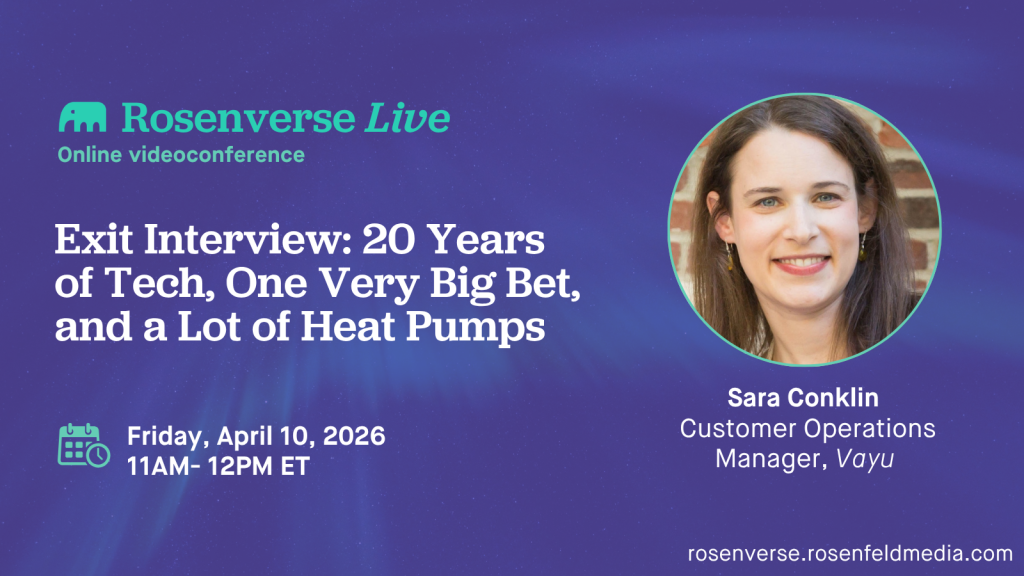
“The title is becoming less important. Focus on the outcome you want to create and whether it feels meaningful.”
What do you do when you decide your skills deserve better problems? Sara Conklin spent 20 years doing UX work she was genuinely good at with people she truly liked. And somehow still went home empty most days. The problems felt too small. Worse, some felt like they were pointing in the wrong direction entirely. So she made a bet on herself. She walked away from a senior UX career in corporate tech and spent 18 months building something new from scratch. She journeyed through certifications, new knowledge, trial and error, and eventually a new career in residential electrification. Now, instead of maximizing clicks and driving consumption, she helps people feel more comfortable in their homes while reducing their bills and their climate impact. These days, she sizes HVAC equipment, pulls permits, coordinates subcontractors, and gets fossil fuels out of people’s homes. She also opportunistically uses her UX background to make the whole operation run better. This is a story about reinvention, risk-taking, and landing somewhere you’d never have predicted you’d find meaning. Watch the recording »
Q: How does a tech background help in an industry like heat pumps?
A: A tech background helps with product thinking, customer experience, systems design, and building better interfaces around a complicated purchase and installation process. Those skills matter because adoption is not just about the equipment; it’s also about making the whole experience easier to understand and trust.
Change is scary, but it’s easier when you know you’re not alone.


