
Last week in the Rosenverse: Product design and crafting your vision
05/04/2026Last week in the Rosenverse, we hosted an insightful event with Catt Small about how to develop a product design idea that actually gets shipped.
Log into the Rosenverse to watch the recording.
See what you missed below.
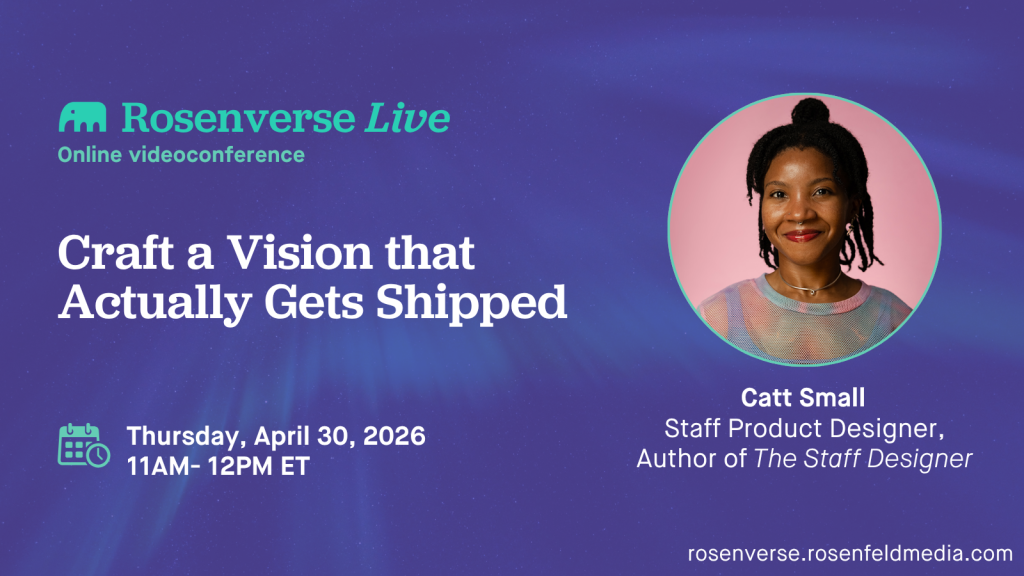
Craft a Vision that Actually Gets Shipped
“Visions capture held knowledge that a team has maybe not been able to yet take action on.”
April 30: Many designers create visionary artifacts (i.e. prototypes and decks) that generate excitement in the moment but do not make a meaningful impact on strategic planning. Teams that operate without the direction of a vision often have create roadmaps that feel reactive and fragmented. This results in user experiences that lack cohesion. In this talk, Catt Small shares a practical process for crafting a product vision that drives real decisions. You’ll learn how to identify the right moment for vision work, anchor future-state thinking in user and business realities, efficiently validate directional concepts, and translate long-term direction into roadmap-ready milestones. Let’s create vision artifacts that increase confidence, align teams, and shape strategy! Watch the recording »
Q&A with Catt Small
This Q&A was drawn from the Rosenverse Live session.
Q: What is a product vision, and why does it matter?
A: A product vision is a strategic illustration of the customer experience you want to create. It matters because it gives teams a shared direction, helps align decisions, and keeps the work connected to both user needs and business goals.
Q: When is the right time to do vision work?
A: The right time is when you need clarity on where the product is going and the team needs help making tradeoffs. Vision work is most useful when it can influence strategy, shape priorities, and create alignment before execution becomes locked in.
Q: What makes a vision actually get shipped?
A: A vision gets shipped when it is grounded in real constraints, tied to a clear thesis, and translated into milestones that teams can act on. If the vision stays too abstract, it will inspire people but fail to change what gets built.
Q: Why do some product visions fail?
A: Many visions fail because the visuals are polished, but the underlying idea is weak or incomplete. High-fidelity mockups can create false confidence if they are not backed by a strong narrative, user insight, and a clear business rationale.
Q: What role should product managers play in visioning?
A: Product managers should be involved early and actively, because strong vision work needs to be rooted in product strategy and business reality. Their input helps make the vision more credible, more actionable, and easier to align across teams.
Catch up on last week’s recordings, and mark your calendar for upcoming events.
See you in the Rosenverse!


