
Let’s recap: Our curators reflect on the first-ever Shift UX conference
10/30/2026This September, industry professionals from all over gathered at The Theater at City Tech in New York City to discuss the tangible shift in user experience (UX). With more than two dozen incredible conference speakers and a thoughtfully curated two-day program, Rosenfeld Media’s first-ever Shift UX conference was a rousing success.
We recently spoke to our wonderful program curators about what they took away from the conference, and what UX could look like moving forward. Here’s what they had to say about Shift UX 2026.
Q: What were your key takeaways?
Abby: We will need to revisit UX education as much as UX practice. Holding too tightly to our identity got us into this, so it definitely won’t get us out. Teams need to develop ways to work that finally break the industrial model of production.
Stef: Here are five:
- Keep calm and float on.
- Insight is not knowledge.
- Design cellos, not kettles.
- Play jazz together.
- (Psychological) Safety first.
Jem: We’re talking endlessly about how AI will change our work. Perhaps we need to spend more time talking about who gets to shape that change, who bears its costs, and how we look after one another while we figure it out.
We feel it falls to us to navigate this change, but we’re not holding our leaders to account for the decisions, conditions, and consequences shaping it.
We’re also narrowing a collective challenge into a UX design problem. Again and again, the conversation returned to UX designers. But where are the strategists, product managers, researchers, data analysts, content designers, and visual designers? We’re all implicated. We all have a part to play. We’re all going through this. But too often the dominant narrative defaults to a subset of designers.
Jon: My biggest takeaway is that the future of UX isn’t just about adapting to new technology. It’s reexamining what makes our work valuable in the first place.
Throughout the conference, I heard recurring tensions between efficiency and effectiveness, production and understanding, automation and judgment, and individual capability and collective intelligence. We seem to be confronting an uncomfortable question: If the tools can increasingly perform the activities we’ve historically associated with UX, what are the capabilities we need to continue to cultivate, and what responsibilities need to remain human?
That’s very much connected to the premise behind my Operations to Orchestration segment. Rather than concentrating exclusively on optimizing processes and deliverables, we need to become better at coordinating people, knowledge, technology, and judgment around meaningful outcomes.
Q: Was there a moment where you saw the room shift, such as a collective “aha” or a debate that took off?
Abby: During the first coffee break on day one, someone told me that in the morning there was a collective “meh” energy. Everyone seemed overly cautious and talked exclusively about the doom of our unprecedented times.
Then they said, “Look around.”
When I did, I saw smiling, passionate people speaking about things that mattered deeply to them. I could see by their stance, how they listened to one another speak, their hand motions, their energy — there was no more “meh” to be found. It was the moment I knew the content and format we planned was doing its job: encouraging people to enter into the discourse.
Q: Which session really resonated with you, and why?
Abby: The entire strategic research block of talks was amazing, specifically Jemma Ahmed’s opening provocation to work with the beauty of being, and knowing you are proudly a roaming goat.
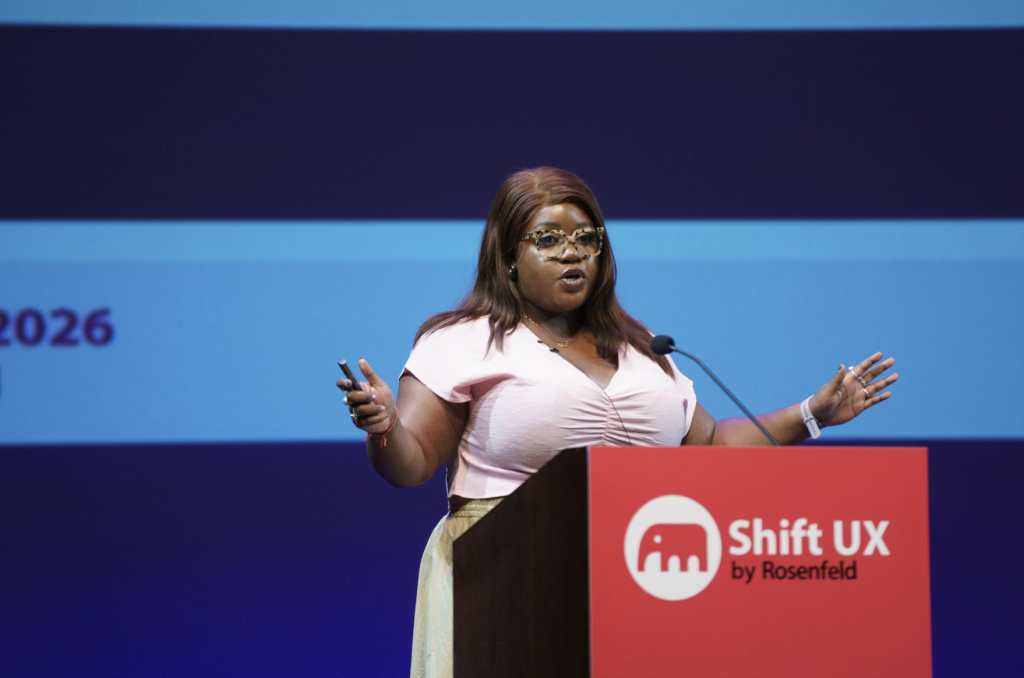
Another talk that stands out to me—weeks later—is Candi Williams’ talk about uncomfortable truths. She did us a service by delicately tearing down where we are as an industry in hopes that we can get out of our own way.
Q: What idea from the stage have you already started using in your own work?
Abby: I think the idea of trying to catch more of the ephemeral energy and in-the-moment moves was a theme that sparked a lot of curiosity for me. Many teams struggle with the idea of governance, and because of that we have given ourselves blanket permission to be ungovernable. I think we are going to need a whole new set of tools not focused on the places we land, but on how we got there, and how we decide where we head next.
Jon: I’m continuing to challenge the tendency to equate faster production with better outcomes. Increasingly, I’m thinking about what organizations need to understand before acting, how decisions are informed and governed, and how human judgment can be strengthened rather than displaced by technology.
I’m also thinking more deliberately about how we design opportunities for people to learn from one another, not just consume information, but question it, interpret it, and put it into practice.
Q: What questions did the conference spark that we need to keep exploring?
Abby: How are we going to bring more people into this discussion? There was a strong recognition by the end of the event that we are limited in our reach when we are only talking amongst ourselves. I think we have a big opportunity to bring in folks from product, other design specialties, researchers, and engineers—just to name a few.
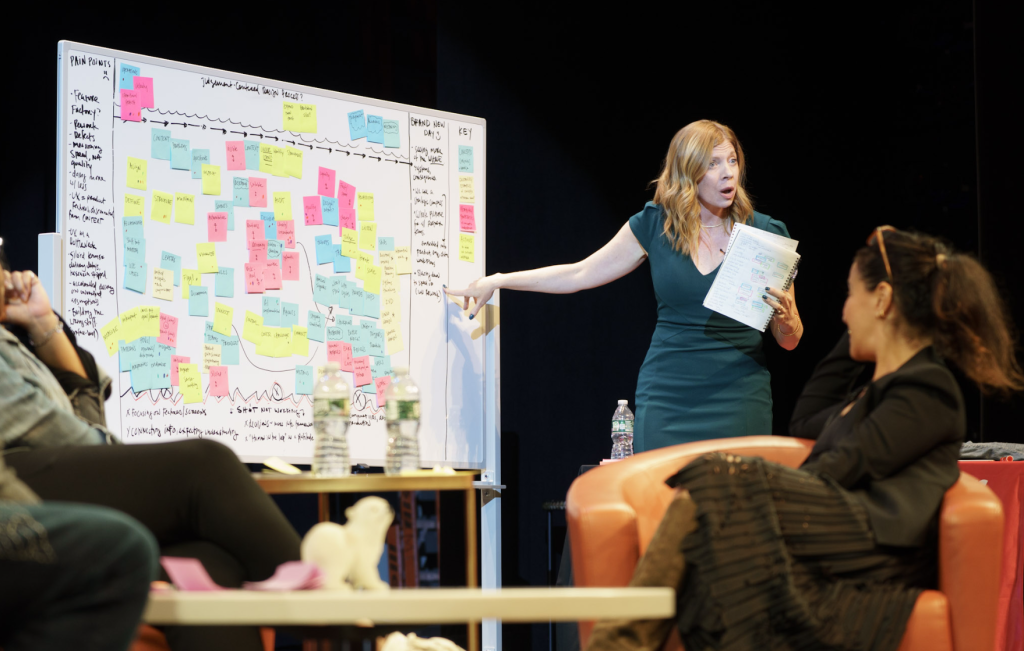
Stef: I want to tease apart three things. The first is the push to use AI, which removes agency from UX practitioners. The other two are where we can gain agency through engaging with AI systems. One is getting hands-on with these tools to build intuition about their capabilities. How can you run your own experiments with AI tools? The other is being conversant in how AI models work. That matters because generative model development choices directly affect UX. Fine-tuning decisions, for example, alter how sycophantic a model is. What is “just enough” ML literacy for UX practitioners, and how can you effectively collaborate with ML engineers?
There were several questions on Slack about whether people were actually seeing benefits from AI use. Building on that, what are examples of AI workflows that have extended your thinking and creativity? What went right and how can you adapt that to your context?
We focused on the challenges and opportunities related to AI software on screens. At the same time, AI systems are steadily building out their perceptual capabilities (world models, robots, etc). How can UX practitioners shape physical AI design decisions (think: designing useful, usable domestic robots that earn a user’s trust)?
Jem: We’re not asking enough critical questions. We talk about AI with extraordinary confidence for a field that often has a limited understanding of how these systems actually work. Where is the scrutiny? The curiosity? The willingness to question the premise, challenge the claims, and push back? The involvement of engineers rather than taking sales pitches at face value? And why the hell aren’t we actively inserting ourselves into AI design rather than circling around what AI tooling does to us?
Q: What should readers start thinking about now, before next year’s Shift?
Abby: Think about the parts of the full stack UX process that they get the most energy from personally. I would encourage them to invest time in understanding the impact of modern roles, tooling, and trends in each specialty in order of how much energy it gives you. In other words, take this one small piece at a time when the UX whale feels too big to swallow.
Stef: You get to design your own role for 2031. What goes in the job description?
Jon: Looking toward next year’s Shift, I’d love to see us move from “What AI makes possible?” to looking at what we’re actually making better, and speaking more truth to power about what’s being lost in the Shift.
Where are we seeing measurable improvements in quality, understanding, creativity, collaboration, and human outcomes? What new operating models are emerging? How are people earlier in their careers developing judgment and expertise when so much of the work that traditionally built those capabilities can now be automated?
Most importantly, how do we make sure that the future of UX work is shaped by the people, knowledge, and craft that contribute to the work, not just by the capabilities of the technologies we use?
Jem: AI didn’t create all these problems. It’s exposing the ones we’ve spent decades avoiding. Poorly defined disciplines, blurred roles, a persistent failure to demonstrate our value, weak leadership, and an enduring habit of positioning human needs in opposition to business goals, rather than recognising that people are fundamental to business success. These are longstanding failures of our field, not consequences of AI. We cannot solve them with better prompts or another framework.
We’re also forgetting the middle. Not everyone loves AI. Not everyone hates it. Not everyone wants to become an expert, an evangelist, or a dissenter. Some people just want to turn up, do meaningful work, earn a living, and get on with their lives. Their voices matter too.
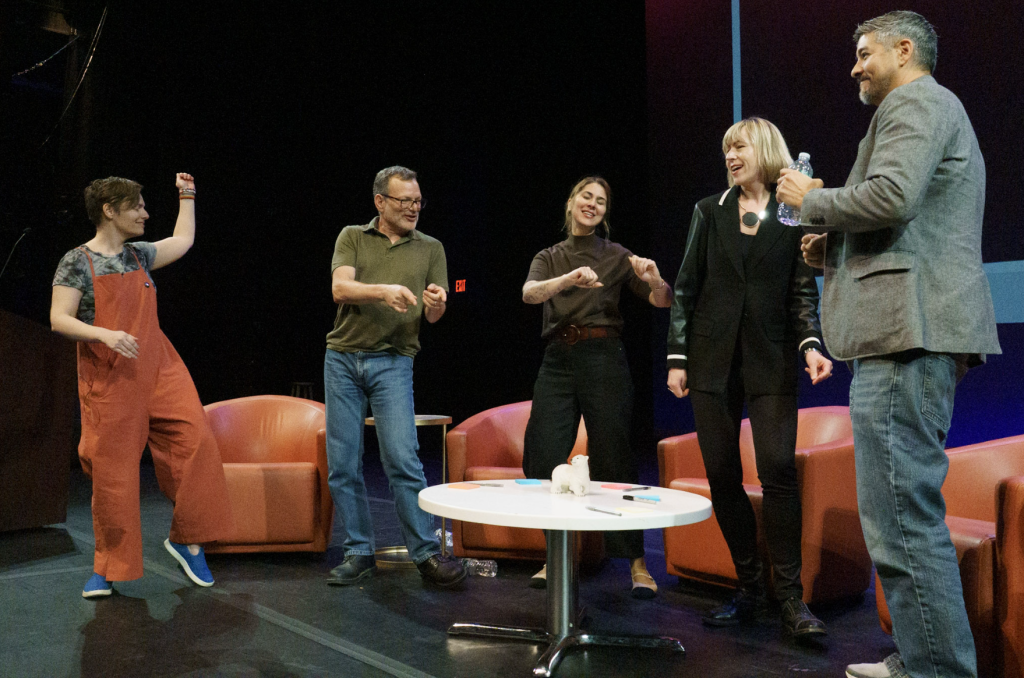
About our Shift UX conference curators
 Abby Covert is an information architect, writer, and community organizer who specializes in helping people make sense of messes.
She has written three books on sensemaking. How to Make Sense of Any Mess (2014), Stuck? Diagrams Help. (2022), and Timeless Sensemaking for Modern Sensemakers (2026).
In 2020, she left a 20-year consulting career to focus on independent publishing and community building. Since then, she launched Makesensemess, a beloved annual storytelling event celebrating sensemakers, and founded The Sensemakers Club. Abby now serves as the Chief Sensemaker of 170+ sensemakers globally, reporting on discussion trends, identifying and training new discussion leaders, and mentoring a growing list of Sensemakers in Residence producing experiments in Community-Powered Education.
 Stefanie Hutka, PhD, is a UX practitioner, author, and educator. She is the founder and head of design research at Sendfull, a boutique consultancy for emerging technology teams. She also teaches UX, systems thinking, and vibe coding at UC Berkeley.
Previously, Stefanie led design research and strategy for 0-to-1 product launches at Adobe, Meta Reality Labs, and DAQRI. She holds an ARCT Diploma in Violin Performance from the Royal Conservatory of Music and a PhD in Psychology from the University of Toronto, specializing in cognitive neuroscience.
Stef Hutka is also the author of What Your Machines Should Do: The Science and Strategy of Human-Centered Automation.
 Jem Ahmed has been working for two decades in the space where consumer, design, product, marketing, and cultural insight meet. A mixed-methods insight practitioner, her work focuses on how technology can empower minority Global communities.
With expertise in data science, market research and user research, she has delivered projects at scale which have had significant business and societal impact. From rebrands, defining creative, advertising and design direction, redirecting product and design roadmaps, through to shaping government and economic policy—Jem does research which creates change. As a leader, she has created, grown and transformed sizeable insight teams at companies such as the BBC, Etsy and Bumble- ensuring the voice of the customer becomes company vernacular. She also works as a curator at Rosenfeld Media, helping to bring together community and education to help other researchers advance their own practices.
Jem holds a Master’s in Law from Cambridge, and is working towards qualifications in somatic psychology and a PHD in adult online harms. A poet, painter, and queer, working-class, British Pakistani, Jem blends academic rigour with creativity and an intersectional perspective.
 Jon Fukuda is co-founder of Limina.co with 20+ years as a User Experience Specialist with a focus on UX Strategy, Design Thinking, and UI Design, with experience leading human-centered requirements, strategy, interaction design, testing, and evaluation. Most recently, Jon has dedicated his efforts to Research & Design Operations facilitation for scalable/sustainable human-centered systems.
Missed out on the Shift UX 2026 conference? Buy the recordings so you don’t miss a second of this industry-defining event!


