
Last week in the Rosenverse: Systems thinking and the heart of design
04/20/2026Last week in the Rosenverse, we hosted two events focusing on building credibility and influence for designers in healthcare, and a story of a UXer leaving corporate tech for greener pastures.
Log into the Rosenverse to watch these recordings.
See what you missed below.
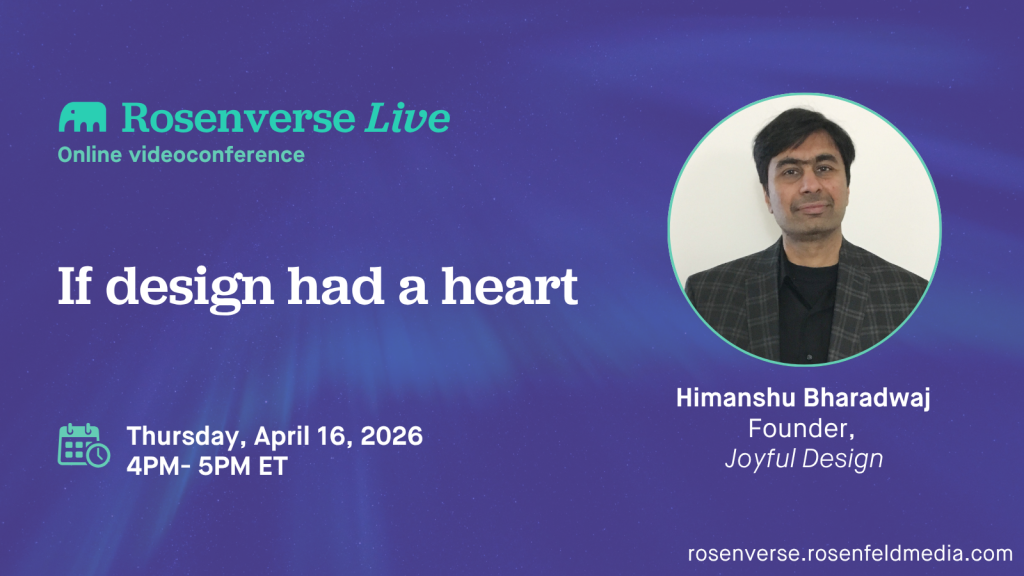
If design had a heart
“For every business metric, there is always a companion human-centric metric.”
April 16: Design is not just about screens and flows. It is about relationships. And love is the ultimate bond between users and products, moving users from mere engagement to a deep emotional connection.
Although love sounds soft and abstract, it drives practical outcomes like retention, trust, and advocacy, and can be a competitive edge. Love scales deeply, and is measurable not as a single number, but as a pattern when people return, forgive mistakes, and recommend the product. Usability makes products usable, joy makes them pleasant, and love makes them meaningful. Furthermore, love makes experiences ethical because it is earned, not extracted.
So how can we intentionally design systems that speak to the very core of human emotions? How should we prioritize emotional attachment and a sense of belonging over basic user liking? Today, we have many functional and forgettable products that feel ‘cold’. This talk with Himanshu Bharadwaj looks at design through the lens of ‘warmth’. Through real UX examples, learn how to design experiences people don’t just enjoy but trust and return to them. Watch the recording »
Q&A with Himanshu Bharadwaj
This Q&A was drawn from the Rosenverse Live session.
Q: Why is emotional connection such an important part of product design?
A: Because people don’t just remember what a product does; they remember how it made them feel. When an experience feels respectful, caring, and human, it becomes easier to trust and easier to return to.
Q: What is the biggest mistake teams make when designing digital products?
A: They focus too much on efficiency and not enough on emotional resonance. A product can be technically strong and still feel cold if it doesn’t acknowledge the human being on the other side of the screen.
Q: How should designers think about warmth in practice?
A: Warmth starts with intention. It shows up in the language you use, the moments of friction you remove, and the small cues that help people feel understood rather than processed.
Q: How can design go beyond “user satisfaction”?
A: Satisfaction is a good start, but I think the real goal is emotional attachment and belonging. When design creates a deeper connection, it becomes memorable and meaningful instead of just acceptable.
Q: What should teams prioritize if they want to build more human-centered products?
A: They should prioritize empathy, clarity, and consistency. Those qualities help turn a product from something people simply use into something they genuinely feel connected to.
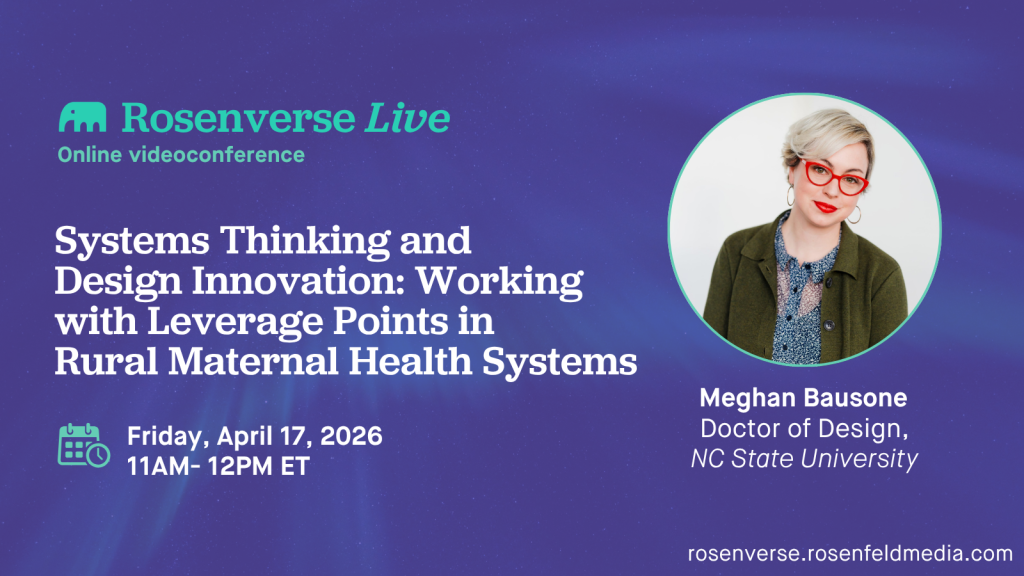
Systems Thinking and Design Innovation: Working with Leverage Points in Rural Maternal Health Systems
“Systems that can self-organize are the strongest form of resilience.”
April 17: Are some problems too wicked, complex, and systemic for designers to solve?
The United States is experiencing a maternal health crisis—with the highest maternal mortality rate among high-income nations globally and an expanding number of counties being deemed “maternity care deserts” or areas without obstetrical services. These failures are disproportionately impacting Black and Indigenous communities, especially in rural areas.
In this presentation, Meghan Bausone shared research that applies systems thinking to first-hand accounts from maternal health stakeholders to identify leverage points for design innovation. Meghan broke down leverage points using Donella Meadows’ framework and discuss the power of her ultimate leverage point — paradigm shifts. Watch the recording »
Q&A with Meghan Bausone
This Q&A was drawn from the Rosenverse Live session.
Q: What was the focus of your session on rural maternal health?
A: My session looked at rural maternal health as a systems problem, not just an access problem. The goal was to identify where design innovation can have the greatest impact in improving maternal care in rural communities.
Q: Why is systems thinking important for rural maternal health care?
A: Because the challenges are interconnected. Access to care, workforce shortages, travel distance, funding, and outcomes all affect one another, so a systems thinking approach helps reveal how the whole maternal health system works.
Q: Why is rural maternal health such an urgent issue right now?
A: Many rural communities face maternity care deserts, hospital closures, and long travel distances for prenatal and delivery care. Those barriers can make it harder for pregnant people to get timely, safe, and consistent support.
Q: How can design support maternal health innovation?
A: Design can help translate complexity into action. It can improve care experiences, make systems easier to navigate, and support more human-centered solutions for rural maternal health access.
Q: What is the main takeaway from your talk?
A: The biggest opportunity is to understand the system well enough to act at the right points. When we do that, design can help create more resilient, equitable, and effective maternal health care for rural communities.
Catch up on last week’s recordings, and mark your calendar for upcoming events.
See you in the Rosenverse!


