Day 1: Service Design Performs Value
— Welcome everyone and will start by stating I’m so pleased to be here and work with the Rosenfeld teams
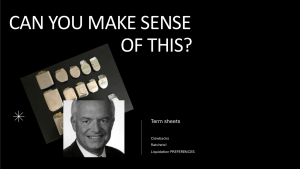
— Start with acknowledging that I’m not a formal services designer, but began my career in finance
- My Dad ran a medical device business, and asked me to get involved with it, and often handed me term sheets and asked me to help figure it out
— Tried to understand things, but some things didn’t click, so I decided to go into finance after college to unravel the mystery of it
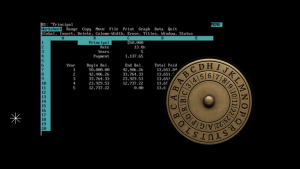
— I went in thinking that I’d learn about the language of finance, and wanted a decoder ring for what to do
- And I expected finance to be numerical and rational— with precision
— I ended up working in development finance and equity finance, and learned finance is not just a system
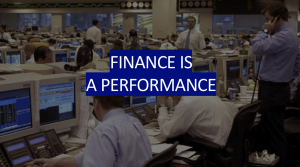
— Finance is how institutions is rehearse judgment and decide what’s possible by determining who gets funded or who doesn’t
- Every spreadsheet is emotional, and every metric performs a worldview
— I then escaped Wall Street for a company that was part of the dot-com boom and thought I was leaving the world of performance behind
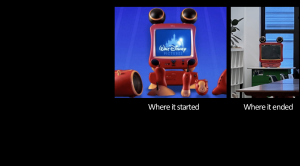
— Then at Frog Design while lighting was different and fixtures were different, I was still performing
— At Frog, I was there to prepare projects to greenlight and getting buy-in from the Executive Director of product, to C-suite, and even presenting to the board room
- The Disney TV set above was Frog’s performance based contract, and it’s lifecycle included hosting students for pitch night
— Went on for leading for strong relationship with Disney
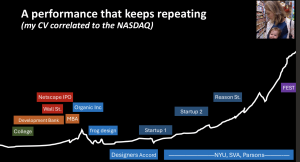
— I was never able to break from the performance choreography, no matter what I did
- Social data, health data, venture backed growth, worked in non-profits, government, teaching…
— Each org had performative script about value
- It’s not just reflecting on what we want out of performance, but core question of what we are grappling with, and where markets and society are converging
— Here’s my argument
- Performance is where service designers can get more ambitious and re-imagine what performance can be
— The way we design systems and how we measure what matters is important for performance
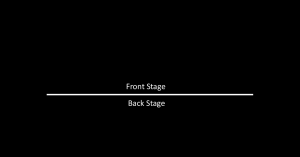
— In service design, there is the idea of the front-stage and back-stage for a service blueprint
- Front stage: What the customer sees when interacting with the service— where experience is delivered and expectations are formed.
- Back stage: The processes, people and technologies that enable the front-stage experience, but that are invisible to the customers
— Comparable to numerator and denominator of an equation
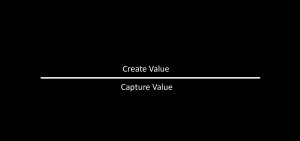
— There’s also the numerator and denominator value of “creating value and capture value”
— This leverage can be skewed
- It was a lesson we learned in the dot-com bust 25 years ago, and will likely repeated in the coming LLM bust
- But there will be plenty to rebuild when the crash happens, and that’s where design will be strongest
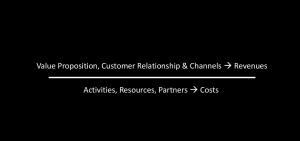
— Then there is a broader business model canvas
- Concept of business model accessible generate revenues, and activities, resources and partners to pay for to generate costs
— It’s a gift that service designers and business model designers can provide to any organization
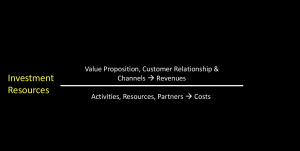
— Investment resources can impact numerator and denominator of the canvas, along with the speed of expected return for capital deployed
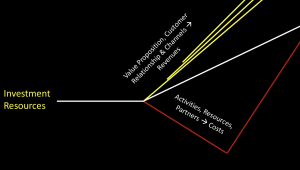
— And the curve varies depending on the enterprise
— The value proposition expected to drive growth and costs to invest
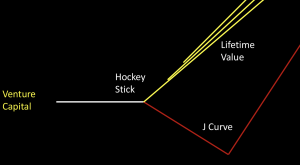
— Graph above shows how venture capital views the world, with hockey-stick growth and ever increasing growth of J-curve, and a tolerance for losses to generate customer value and get demand going
- Some people work in these spaces, or competing with companies that are in them
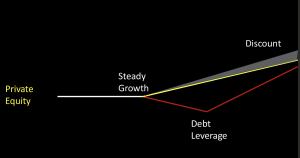
— Private equity, on the other hand, has a tighter field of action within debt repayment schedules, and discount with uncertainty about the future, which is embedded in every net present value number you’ve had to argue with
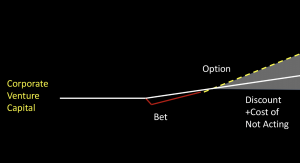
— Corporate venture capital has different growth expectations
- Weigh the options of acting on a bet, versus the discount value, and what is the cost of not acting
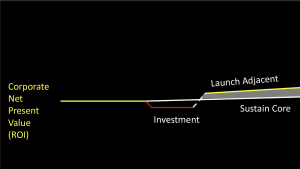
— The metric most designers identify with is Corporate Net Present Value ROI, and NPV within company structure where the innovation context needs to deliver value to sustain core business, and get revenue growth while launching adjacent markets to explore
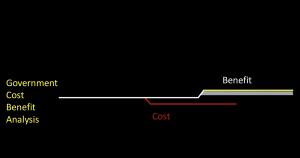
— And there is the framework for Government Cost Benefit Analysis to imagine what will happen with what government has to spend
- Clear cost and expected benefit are the rules here
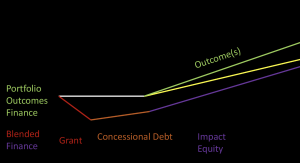
— Then we have the exciting world of portfolio outcomes finance that talks about the possibility of projects interacting with each other
- Enabling environments for adaptive capacities to invest in, before market-based subscriptions can come in
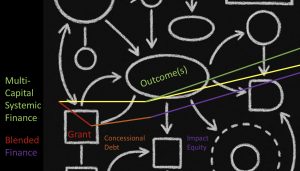
— Where I spend time today is focusing on systemic finance with investors, communities, and philanthropists that have more of a portfolio approach
- You are not dealing with a company and program, so much as a nested set of interdependent outcomes, much like life

— We will focus on the idea of performing value
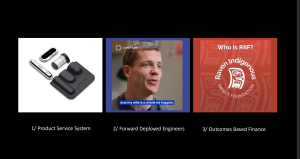
— I’ll focus on specific set of interactions on how value is performed for the task of diabetes monitoring, with different funding frameworks
- Diabetes tech solution that was structured as a small business
- AI scribing and ambient AI adoption, that was venture capital backed
- A broader community focus on managing diabetes
— We’ll compare performance and outcomes across these frameworks
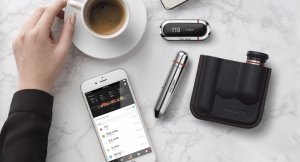
— App was called OneDrop and was reimbursed by insurances, with set price per users
- Company had good run, and we raised a lot of money, and I jumped off the J-curve before it ran upwards
— The KPI for this space was to lower the A1c value— which was the average amount of blood sugar in red blood cells
- Investors, insurers, pharma narrated the plot, and UX design came in afterwards
- It was a performance of care for those with smartphones and steady-data plans
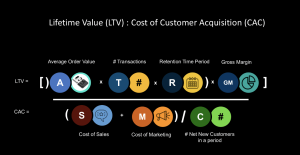
— The above equation of “Lifetime Value over Customer Acquisition Costs”, was the key tool for service design teams, and applies to my work as a business modeler
- Lifetime value and cost of customer acquisition, changed how investor sees cost equation, and ultimately investing in LTV and average order values, while focusing on reducing the cost of acquisitions
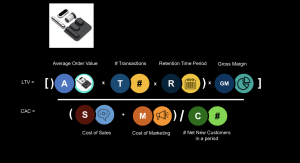
— Job in this company was to sell the product first, and the break the current razor blade-like business model for monitoring diabetes
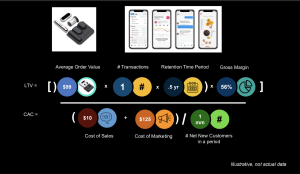
— There was also an app to control day time use, food intake, and community readings that the broader team was doing, which led to greater net retention of revenue, allowing us to spend more
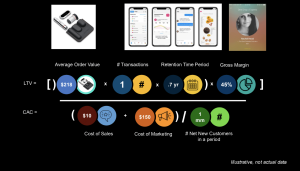
— We could also add a diabetes educator and see how that impacted the margins
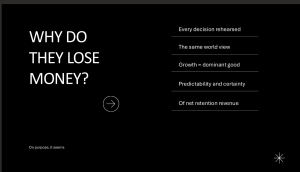
— Scenario explains why the company was allowed to lose money and intent model is rehearsed with same volume
- This defines how stages are set before service design even enters the picture
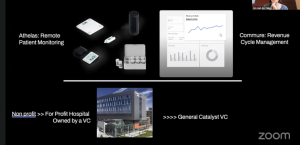
— Our second story, with a second set of metrics, that include merger of remote patient monitoring company, a revenue cycle management firm, and a for-profit hospital
- Existing hospitals took too long to close deals
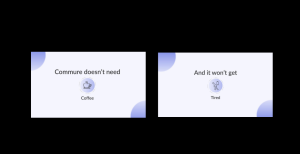
— New act of revenue cycle management was a place for AI to enter for billing automation, and performance was tied to interaction with the tool, and key for providing connected financial performance
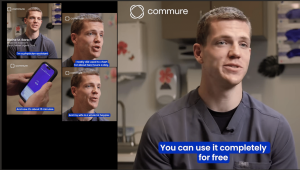
— The still allowed humans to be there, and the tools were offered for free
- Doctors cast in their role, with the goal of giving them more time
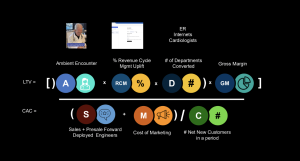
— The equation here is on-tech site consultants, turning interaction patterns into product requirements, creating data ontology, and front load data and figure out how to define health value
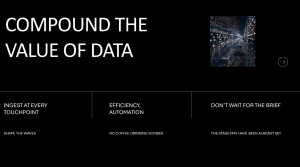
— So if you come across these organization as a service designer, don’t wait for the brief to show up
- Understand the stage is already set by the funding model and metrics, and work to gather data accordingly

— For our final model, I’ll go to Winnipeg, Canada and the island lake region where healthcare is provided by helicopter and boat, and the First Nations people that have relied on land for sustenance for centuries
- These First Nations communities have much higher-levels of diabetes compared to the general population

— This intervention was initiated only by community demands, rather than pre-determined and ensuring health markers and culturally relevant communicators are included
- Community sense of intervention
- Reducing poverty as initiatives in pursuit of good life
— It wasn’t a top-down model where outside experts determine solutions, set care, fund guidelines, and create programs that don’t reflect the reality on the ground
- Community driven outcomes steered the contract
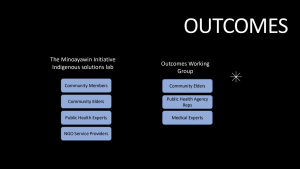
— Service Design involved here dealt with convening community members and public health
- Something that doesn’t happen as provision of project and ongoing performance with outcomes to work toward
- Community elders, medical experts, public health agency reps
— Community members are equal partners, and provide key outputs
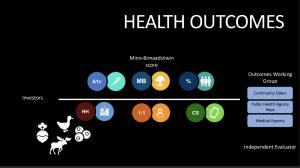
— Outcomes tied to the A1C value and participation in community design programs, and the vitality of a shared kitchen model— something done by community itself
- Investors show-up but on the community’s terms, with payments released based on community alignment
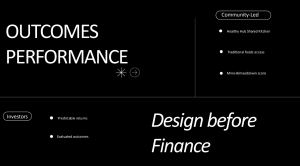
— Performance begins with people and land who co-create value they wish to sustain
- When performance itself is the act of care
— So, to summarize:
— These stories unfold within the healthcare system, but in different ways
- Not just technical, but also the funding source
- In first two commercial spaces, service design comes after financial arrangement is set
- In the last community-oriented space, service design came first, and defined performance first
— So what kind of world do we want to perform?
— We can show up to imagine what else systems can perform, with metrics contracts and flows that determine world we want to exist
— Imagine scaling this third project out, and reimagining the world, according to our values even in a place like NYC
- About choreography and not control
— Service design works as the rehearsal space as medium where contribution becomes visible and challenge and opportunity to show what it means
— In the end, our models and metrics are temporary scripts, but the goal is the rehearsal for the script, and how we show-up and keep rewriting the score together
— Thank you!
Q&A
- If not waiting for brief, what are you doing?
- Don’t wait for phone to ring, but be intentional about work and contribution you’d like to make to it
- I often had to knock on doors and have ideas— if you see something in the world and don’t like how it works, figure out how to approach and propose something to people impacted by the problem
- Most rewarding work has been what I found people, instead of people finding it for me
- And within companies — we have to recognize that orgs are their own marketplaces with their own needs and ambitions— if you wait to ask what design can do, you can wait a long time
- Focus on pitching value of design, and how it can tackle problems the organization is facing
- Showing up with services and practice for people
- Don’t wait for phone to ring, but be intentional about work and contribution you’d like to make to it
- When leaders ask for performance metrics they want to see movement and results— sometimes front or back stage. How can SD use this approach for our advantage?
- Don’t accept boundaries where SD is not pigeonholed as just a customer experience function, and walk into situation for understanding pressures facing the company, and the broader financial situation of company.
- Even if your direct client is not embedded in that financial situation, their role in the organizational hierarchy will be, and will permeate budget decisions that are made
- Use your skills to read the annual report, if it’s a public company. Walk into that frame, and have understanding how financial arrangement will bind the range of your performance
- Your decisions in the numerator of the value equation can help with denominator— and position client to go further in the org
- Leveraging the desirable, viable, feasible framework — we can’t be myopic about front stage and interactions for customers
- Finding ways to create conversation ahead of time, of what we were all about— and link to business performance issues to the decisions being made and design choices being decided on
- Don’t accept boundaries where SD is not pigeonholed as just a customer experience function, and walk into situation for understanding pressures facing the company, and the broader financial situation of company.