
Day 1-Design ROI: Cover a Little, Get a Lot
— Thank you for the introductions
-
Hi everyone, I’m a global design ops manager at Stander with over 10 years of experience
-
We have more than 400 designers across 10 countries world wide with an extensive portfolio of projects and programs
— Happy and grateful to be here at the DesignOps summit
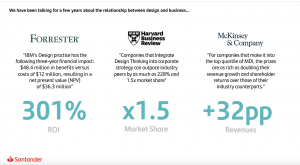
— Digital transformations have brought up how design impacts revenue and P&L statements
-
Several studies have talked about results produced in business terms
-
Studies from Forrester, HBR, and McKinsey have showed how design has benefits for ROI, differential value, and market share
-
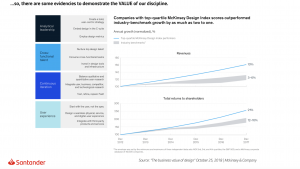
— And there is evidence to show value of design thinking
-
A study tracked the design practices of 300 listed companies across industries and countries
-
It found close correlation between the design culture and financial performance with human centered design practices being tied to better metrics
— This is attractive for us, as there was an empirical demonstration that designers work contributed to the bottom line
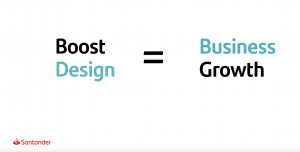
— Promoting design means business growth and this has been proven to work
-
And these studies are based on many years and rigorous analysis
— But how can we measure impact without harming the day-to-day work that we do
-
Thinking about ROI will help us answer this question
-
Another question is why? Do we really need strategy to measure impact in business terms?
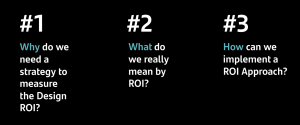
— So let’s ask why, then reflect what ROI is, and then how we can implement an approach to ROI for design
— So why ROI?
-
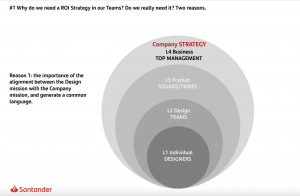
Let’s divide an org into four levels, where there are different views on the day-to-day vision of company
-
DesignOps works on levels 1,2,3, but we often forget to align our success on company goals
-
We need to maintain connections the amongst rest of levels, since the language of day-to-day conversations is different across levels
-
Only then can we quantify how we are contributing to an overall strategy
-
— At a high level, we often don’t face how our work is adding to the big picture goals of the company
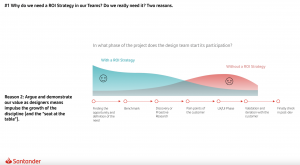
— In terms of design growth, our level of discipline is proportionate to our business impact
-
Businesses that don’t have disciplines tend to be reactive
-
Those with a clear ROI and approach are proactive and influence processes from the beginning
— We can build credibility and get involved faster in the product creation process, with a disciplined approach
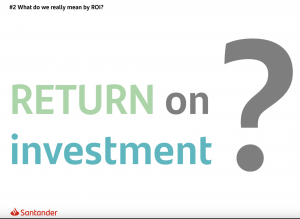
— Investment means giving something up, with the expectation to get something bigger
-
For design, we can summarize ROI in three blocks
-
Investment in time/effort
-
Investment in people for the team
-
Investment in budget, and informal items
-
— So what is the formal definition of ROI, now that we’ve locked down the why
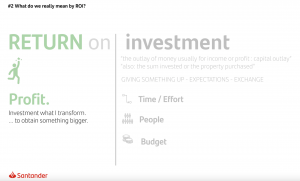
— Profit is what materializes expectations of investment, but it’s not ROI itself
— At some point, financial language can get lost in complex relations and hard to define
-
And it’s hard to tie to improvements in design to financial results
— No magic recipe exists for clarifying a direct relationship between design and finance, so let’s keep it simple
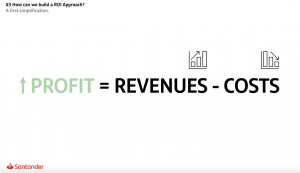
— To increase profit have two options 1) Increase revenues or 2) reduce costs to increase profit
-
We can associate metrics to see how we move profit forward
— You should always think: What am I doing for this project to help move company profits?
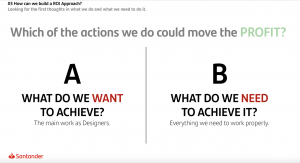
— Take two paths for classifying work
-
To left: Everything we do in terms of goals
-
To right: Everything we need (the resources) to accomplish the goals
— These two groups will be our field of work
-
So let’s lookout for an example
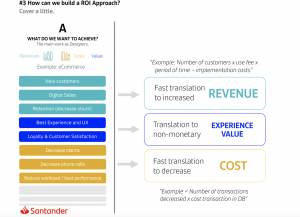
— But there is a third group, not directly relate to revenue and cost: experience value
-
Experience value related to design itself
— Common mistake though of trying too long to translate experience goals into business metrics
-
If included in one of these groups
-
Encourage you to try exercise of applying goals to revenue, costs, and experience values of your org
— Once you have these items, translate into metrics
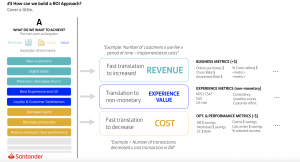
— These metrics then provide a vision for how design contributions tie into company goals
-
Vision of customer perception added as well
— Part of design contribution then looks to be revenues, savings, and grasping customer feelings to a product
-
Experience value metrics depend heavily on your own metrics
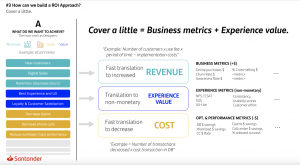
— Bear in mind that it is not common to see how team how demonstrates it’s added value to broader company goals
-
This is a competitive advantage for you
— We have achieved a lot, by covering a small number of topics
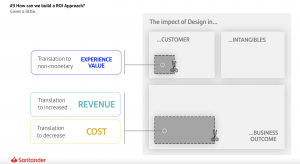
— Design is much more than these items in terms of value add, but it is harder to measure
-
So let’s cover a small part of customer and business outcomes
-
I’ve had many conversations where people say defining value of design is not possible
-
I’m sympathetic, but my approach allows us to make some decisions
-

— So we have a framework in our approach, but what about investments?
— In an article I once read, and advertising executive once said he didn’t know which of half of his ad dollars were wasted:
-
Investments act as the baseline for your approach
-
Let’s look for clues about where to find them
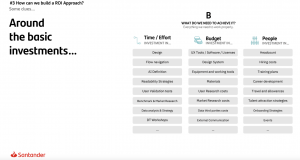
— Remember, we have three groups of org activities: time/effort, budget, and people (investment in the team)
-
So let’s see how they can be added to an ROI framework
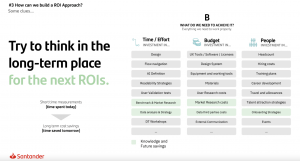
— Important to think in long-term, and how what we do today translate into tomorrow
-
Documenting design quarterly might not be key for current returns, but for future returns and projects
-
Take the time and effort to subtract savings from long-term investment
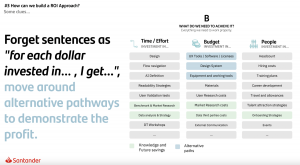
— Forget phrases like ‘for every dollar of X, you get Y’
-
My recommendation is to find alternative paths to get quantitative metrics
— Let me make this clear with a story
-
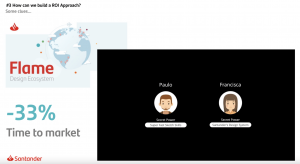
For the launch of Santander design system we were asked how to measure business impact
-
So we asked populations about efficiency of using our products, and create simulations showing how the Flame design systems drastically reduced development time by reusing components
-
-
Developed metric in reducing time-to-market, which could be carried over to other ROI metrics
-
Found other ways to exploit metrics to improve our approach
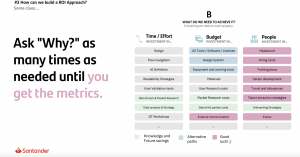
— And we ask “Why” as much as needed to get the needed metrics
-
For example when developing training plans, ask why the plans are important until they can be traced back to a profit-based metric
-
This is important as way to chart distance between our goals and company goals
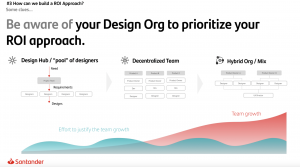
— Finally, we must be aware of the kind of org we operate, to understand what metrics we should focus on
-
Our work could be a design hub, or a pool of designers that are contracted out for specific designs
-
There could be a need to justify work that has peaks and valleys before org changes
-
-
We need an ROI approach on to explain to top management how to do things
— In early phases, we need to develop a strategy that shows the value as designers at each stage of the org
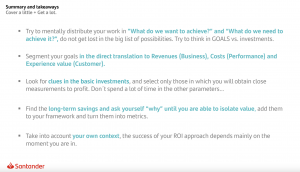
— Finally, I’ll leave with a summary on the main takeaways I have from this presentation:
-
Mentally distribute the work between ‘what we need to achieve’ and ‘how to achieve it’
-
Segment goals to business, costs, and experience value
-
Look for clues in basic investments and see those that get close measurements to profit
-
Explore options for long-terms savings through “Why” questions
-
Take into account own context, as success of ROI depends on the moment you are in
— As DesignOps we need to demonstrate the value of what we do to make design grow, and have our work be part of company strategy
— And there is no strategy alignment, without us understanding the business strategy

Q&A
-
Just because we can measure ROI, should we? What is your success in presenting ROI? What is the ROI of ROI?
— At the end of my presentation, I think the important thing is to relate strategy based on your own company context
-
How you sell ROI in high-maturity org versus startup
— Will think about the ROI of ROI metric
-
How have metrics tied to design elements relative to marketing, bug code fixes? What is the correlation?
— As designers we have partial responsibility for profit metrics
-
Point is, the more you have good relationship and alignment with business goals, the more resources you can obtain to quantify your contribution to the big picture
-
How to differentiate ROI for design versus product management?
— Ask: Do we need to include in baseline commercial time dedicated to promote something for a client
-
Baseline is dependent on context
-
With ROI covered a little, we are keeping in mind the most important things to explain to the organization
-
-
Who to include in an ROI exercise?
— All of the designers, so we are in sync in explaining our value to the organization
-
Encourage our designers to be good storytellers to convey the value we bring
-
Can we view the video showed regarding the Santander design system?
— Yes, and you can also search for our efforts in Google for documentation related to how we implemented the design systems
-
How to deal with budgets that have different timeframes and incentives to make initiatives go forward?
— The point is that we are trying to show distance between goals in company strategy and company budget compared to our local budgets and daily actions


