
Prototyping

A Practitioner's Guide
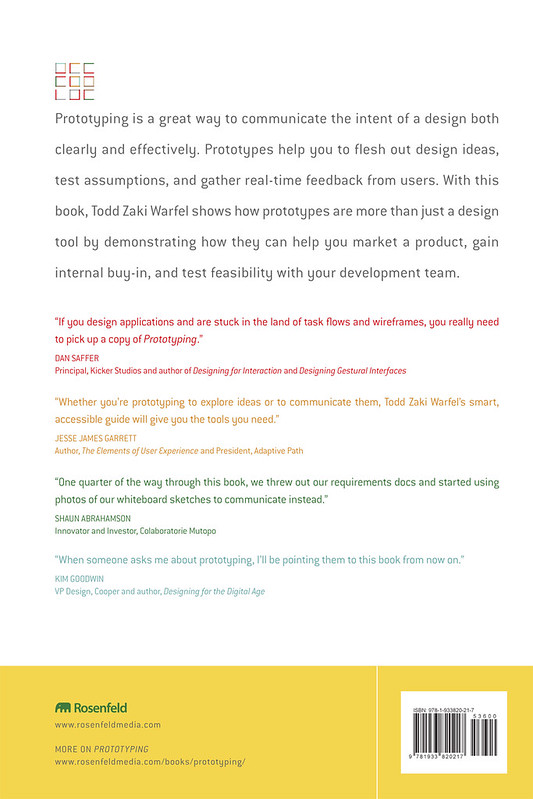
Prototyping is a great way to communicate the intent of a design both clearly and effectively. Prototypes help you to flesh out design ideas, test assumptions, and gather real-time feedback from users.
With this book, Todd Zaki Warfel shows how prototypes are more than just a design tool by demonstrating how they can help you market a product, gain internal buy-in, and test feasibility with your development team.
Prototyping is a great way to communicate the intent of a design both clearly and effectively. Prototypes help you to flesh out design ideas, test assumptions, and gather real-time feedback from users.
With this book, Todd Zaki Warfel shows how prototypes are more than just a design tool by demonstrating how they can help you market a product, gain internal buy-in, and test feasibility with your development team.
Testimonials
If prototyping isn’t already part of your design process, this book will not only persuade you that it should be, but will show you how to make it happen. Todd’s straightforward explanations and useful examples will help even experienced designers decide what kind of prototyping to do, when to do it, and what tools will be most effective. When someone asks me about prototyping, I’ll be pointing them to this book from now on.
Kim Goodwin, VP Design, Cooper and author, Designing for the Digital Age
One quarter of the way through this book, we threw out our requirements docs and started using photos of our whiteboard sketches to communicate instead. Thanks to Todd for consolidating and analyzing the wisdom and case studies from a variety of practitioners to identify what prototyping techniques will work, now.
Shaun Abrahamson, Innovator and Investor, Colaboratorie Mutopo
Todd’s text offers a comprehensive view of prototyping– from the role of prototypes in socializing decision making and achieving organizational buy-in, to the actual pragmatics of creating interactive artifacts. This is a solid book for those “in the trenches”–the designers doing the actual work that ends up in the actual products we use every day.
Jon Kolko. Editor-in-Chief, interactions and Associate Creative Director, Frog
If you design applications and are stuck in the land of task flows and wireframes, you really need to pick up a copy of Prototyping: A Practitioner’s Guide. Todd offers practical, hands-on advice to jump start your prototyping and make your designs truly interactive before they are built.
Dan Saffer, Principal, Kicker Studios and author of Designing for Interaction and Designing Gestural Interfaces
Table of Contents
Chapter 1: The Value of Prototyping
Chapter 2: The Prototyping Process
Chapter 3: Five Types of Prototypes
Chapter 4: Eight Guiding Principles
Chapter 5: Picking the Right Tool
Chapter 6: Paper and Other Analog Methods
Chapter 7: PowerPoint and Keynote
Chapter 8: Visio
Chapter 9: Fireworks
Chapter 10: Axure RP Pro
Chapter 11: HTML
Chapter 12: Testing Your Prototype
FAQ
- What prototyping method should I use?
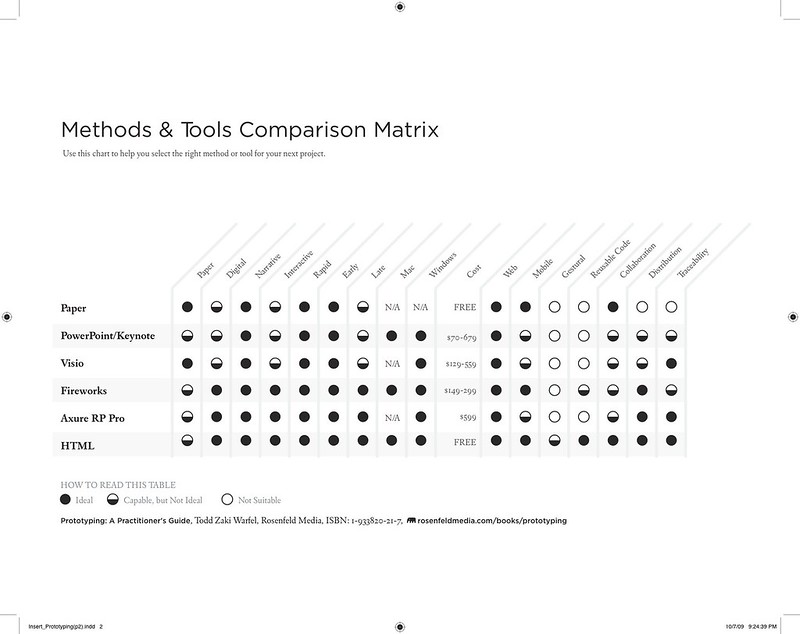
When choosing a prototyping method, a number of deciding factors need to be considered. You should start by asking the following questions: What’s the goal of this prototype? Who is its audience? How comfortable am I with this method? Is it something I already know or can learn quickly? How effective will this method be at helping me communicate or test my design? The right prototyping method for your current situation depends on how you answer these questions. As your answers change, so might your selection of prototyping methods and tools.
See Chapter 5.